
Nine Marks to Check When Your Container Arrives
An aluminium structure arrives as bundles, crates and loose fittings, and the moment to find out whether it survived the voyage is before the container is unloaded onto a site where nobody can tell what went wrong.
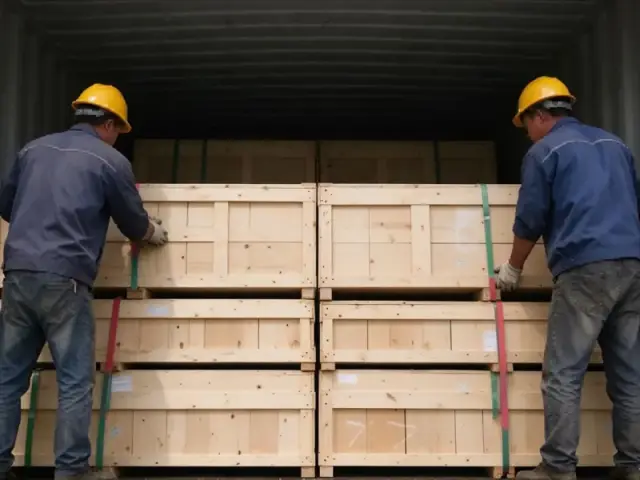
Before the doors open
Photograph the container seal and the number against the bill of lading before it is cut. Then photograph the inside of the doors, because a shifted load leaves its evidence there and the evidence is gone once the first bundle is dragged out.
Who does the unloading
Give the job to one person with the packing list in hand, and let the crew move steel only after that person has walked the container. Unloading is the one hour of the whole project when the material is all in one place and still unassembled, so a shortage found then is a phone call, while the same shortage found three weeks later is a re-shipment.
The checker needs three things: the packing list, a marker, and a phone with the camera ready. Everything found wrong is photographed in place, with the label in the frame. Everything found right is ticked on the list, so the list becomes the record rather than a memory of a morning spent in a car park.
The nine marks
- Bundle count against the packing list.
- Crate count against the packing list.
- Bundle labels: set number, member name, length.
- Cut ends: wrapped and free of dents from the voyage.
- Coating: no rub marks where bundles rested on each other.
- Blades: no bend at the ends, which is where they take load in transit.
- Fittings boxes: present, sealed, and marked with the set they belong to.
- Glass or sheet crates: still upright and still on their feet.
- Moisture: no condensation inside the wrapping, which points to a wet load.
The two marks most people skip
The first is the fittings box. A missing box of brackets and screws does not stop the first hour of work; it stops the last, when the frame is standing and the fixings are in a container two thousand miles away. Count the boxes against the list before anyone leaves the loading bay, and check that each box carries the set number it belongs to.
The second is moisture. Condensation between the wrapping and the profile, or a water line along the bottom bundle, means the load was wet at some point on the voyage. Wet aluminium is not ruined, but powder coating that has sat wet for three weeks can blister in the sun later, and the time to record it is the day it arrives rather than the day the blister appears.
How to record a problem
Photograph the damage in place, before anything is moved, with the label visible in the same frame so the piece can be identified. Send the packing list number with the photos, and note the time. An honest claim is a factual one, made early.
What to do with a shortage or a damaged member
Do not send four photographs and a sentence. Send the set number, the member name, the length from the label, the quantity short, and one straight photograph of what was received where that member should have been. A factory can cut a replacement member in a day, but only if the replacement is identified precisely enough to cut it.
For a bent blade or a dented post, photograph the member against a straight edge and record where the deformation sits. A single damaged blade is usually a replacement part; a bay that was strapped too tightly and carries the mark of every strap is a claim against the packing, and the difference matters when the packing is reviewed for the next container.
The habit that prevents most of it
Marks on the crate and marks on the list must agree. When they do, unloading becomes reading rather than guessing, and a shortage is found in ten minutes instead of after the crew has started assembling the wrong bay.
Where the crate should be opened
Open where the ground is flat and the crate can stay on its feet. A crate broken down in mud has to be lifted by hand, and a member lifted from a crate lying on its side is a member dragged across its own contents. If the site cannot offer flat ground, keep the material on the pallet or stillage it arrived on and move it in loads rather than unpacking at the container door and carrying everything twice.
Bundle straps and corner protection should stay in place until the member is at its bay. Straps removed at the container are straps that no longer protect the profile on the journey across a site, and a coating rub that happens on site is a cost the buyer pays rather than the carrier.
Explore the range: Louvered Pergola — sections, finishes and the drawings we send with a quotation.
Keep reading
EXW, FOB, CIF and DAP for Aluminium Structures
EXW, FOB, CIF and DAP on an aluminium structure order: where responsibility moves, how the term changes packing,…
Read article →
Packing list marks: why the crate and the list must agree
Two documents describe the same shipment. When they disagree, the container waits at the port.
Read article →
LCL or a full container for an outdoor structure order
It is not only about freight cost. It is about how many times the material is handled before…
Read article →Related notes
- How to Read a Shop Drawing Before You Approve It
- Powder Coating vs Wood-Grain Finish in Coastal Air
- What a Pergola Quotation Should List, Line by Line
Working on a project? Send a drawing and we reply from the Foshan plant with a first price. Not sure which line fits — start from the six product lines.