
Powder Coating vs Wood-Grain Finish in Coastal Air
Coastal projects ask a finish a simple question: can it hold colour and adhesion when the air carries salt and the sun is strong? Powder coating and wood-grain transfer both answer, but not the same way, and the difference shows up in year two rather than week one.
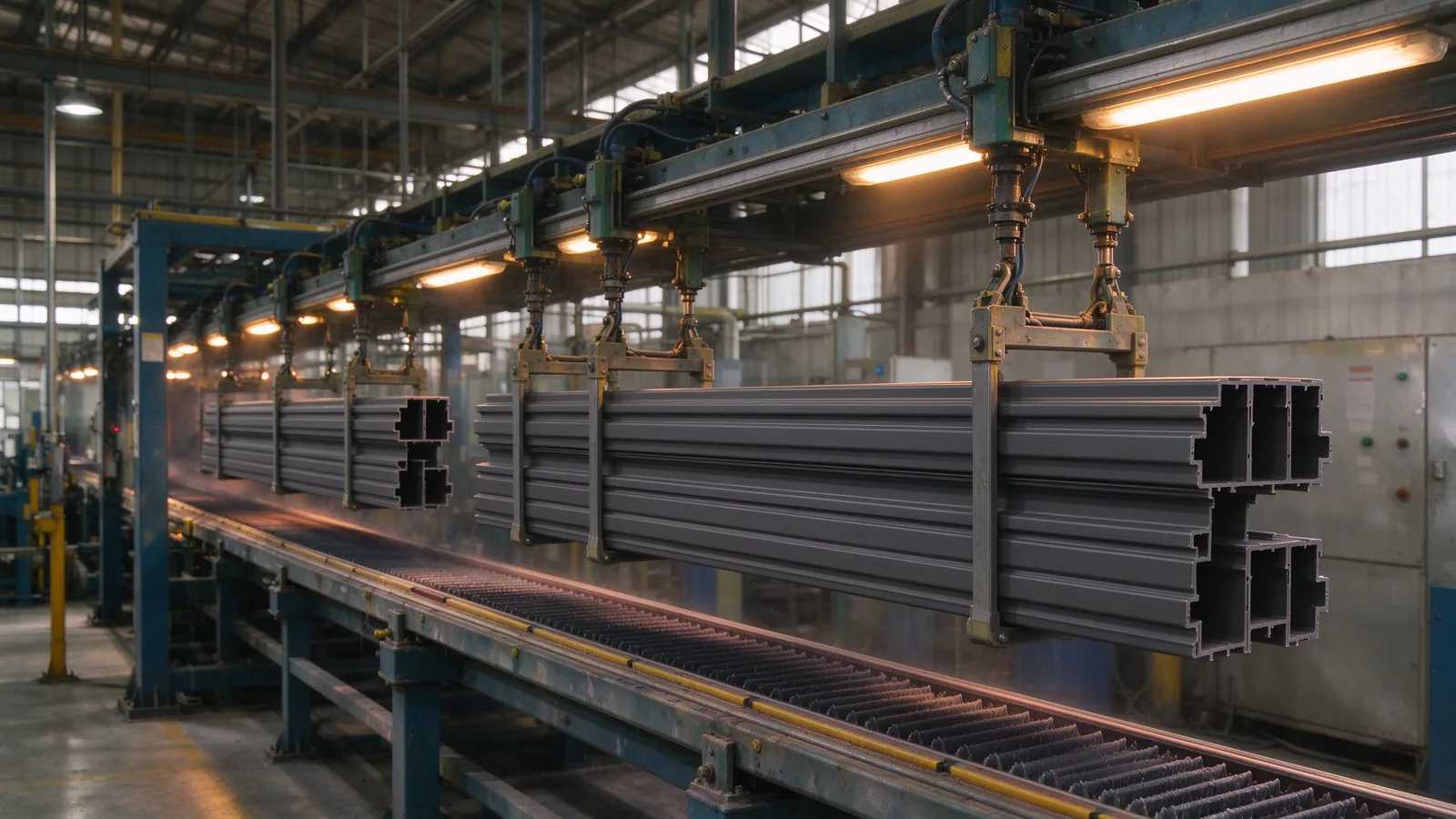
How a powder coat works
Powder is sprayed electrostatically onto a pre-treated extrusion and cured in an oven, forming a continuous film. On aluminium the pre-treatment is the part that matters: degrease, etch, rinse, conversion coating. Skip a stage and the film blisters from the edge inwards, which looks like a coating failure but is a pre-treatment failure.
How a wood-grain finish works
A base coat is applied, then a transfer film prints the grain, then a clear top coat seals it. It reads as timber from a few metres and is the finish most buyers choose for a Chinese pavilion or a garden pergola where timber is the reference. It also carries more layers, and each layer is a place where adhesion can fail if the process is rushed.
What salt air does to each
Both finishes survive coastal air when the coating thickness and the pre-treatment are right, and both fail when they are not. On a coastal site we specify a thicker film and a full conversion coating, and we avoid sharp cut edges where the film is thinnest, because that is where corrosion starts.
The specification that makes either last
Coastal durability is decided at the specification stage, not at the choice between two finishes. Three lines do most of the work: the conversion coating before any paint, the film thickness measured on the finished part, and whether the edges, welds and cut ends were treated rather than left bare.
The cut ends deserve their own mention. A profile cut after coating leaves a bare aluminium edge, and a bare edge in salt air is the first place to show a white deposit. Where a frame is cut to size after it leaves the line, the ends should be touched in, and that is a production decision the buyer never sees and always lives with.
Where wood-grain is the better choice
Wood-grain wins when the structure has to sit inside a timber world: a garden with a hardwood deck, a lakeside house with timber cladding, a Chinese pavilion where the reference material is wood. In those settings a flat powder colour reads as a foreign object, however good the coating is.
It loses when the reference is a modern render and white facade, where a printed grain looks busy at close range, and when the budget is tight enough that the difference would be taken from the frame section rather than from somewhere else.
The questions to put to a factory
What pre-treatment, and is it a full conversion coating? What film thickness on the finished profile, measured where? Are the cut ends and welds touched in? Which RAL, and can I see a swatch before the run? And on wood-grain: how many coats, and is the top coat a clear powder or a liquid?
Five answers on one page tells a buyer more about finish quality than any photo of a finished terrace, because the parts that fail are the parts a photo cannot show.
The maintenance difference
Powder coating needs washing two or three times a year to remove salt, and nothing else. Wood-grain needs the same wash plus care with the grain direction, because a stiff brush on a printed surface dulls it. Neither needs recoating in normal use, which is the point of the comparison.
If the site is within a few hundred metres of the sea, say so at quotation stage. It changes the specification, not just the price.
The colour question comes first
Most coastal projects reach the finish question through colour rather than through chemistry, and the two are not the same decision. Any RAL reference can be matched in powder, which means the palette is almost unlimited; wood-grain transfer needs a base coat under it, so the choice narrows to a handful of standard grain tones unless a custom base is paid for.
That matters when a project has to match an existing element: a bronze window frame, a black steel gate, a specific grey on a neighbouring building. Powder matches it exactly; a printed grain approximates it. If the match is the requirement, the finish is already decided.
Coastal salt air is not a reason to choose one finish over the other; it is a reason to specify both properly.
Explore the range: Louvered Pergola — sections, finishes and the drawings we send with a quotation.
Keep reading
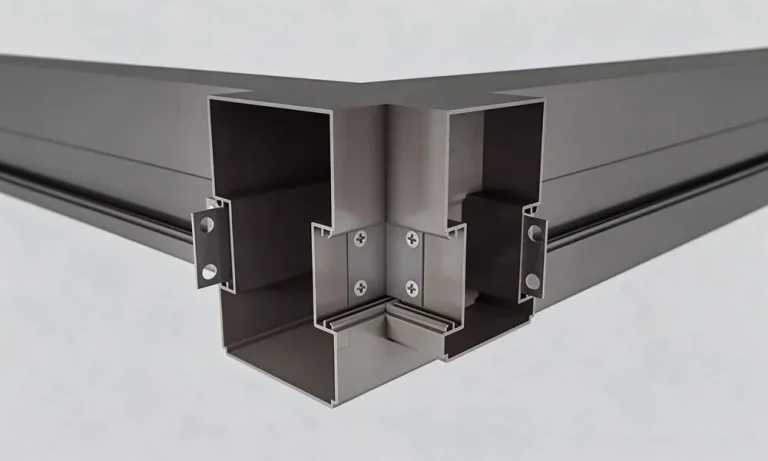
Internal or External Foot: Which Base to Specify
Internal or external foot on a louvered pergola: plate area and anchor access, which detail the wind decides,…
Read article →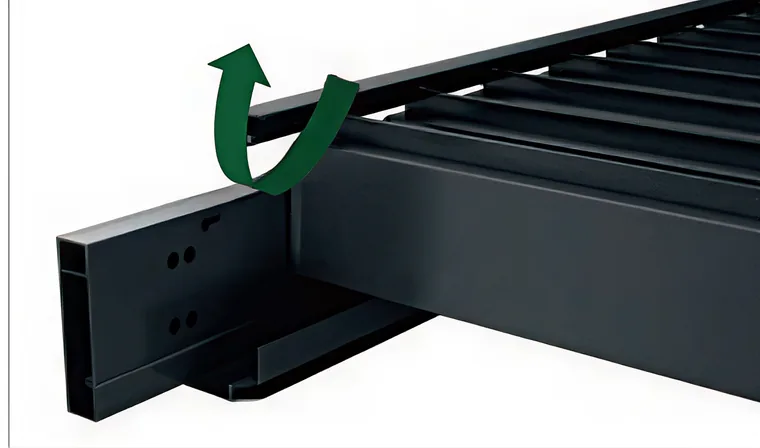
Blade Sections 160×29, 180×35 and 220×45: What Changes
Blade sections on a louvered pergola: 160x29, 180x35 and 220x45, what each spans, how blade count changes shade,…
Read article →
Powder coating vs anodised: what a contractor should actually compare
Both finishes appear on the same drawings and they are not interchangeable. What the difference means after two…
Read article →Related notes
- What a Pergola Quotation Should List, Line by Line
- How to Choose a Pergola Size for Your Terrace, With Span Limits
- Aluminium vs Timber Pergola: What Actually Fails First in Year Three
Working on a project? Send a drawing and we reply from the Foshan plant with a first price. Not sure which line fits — start from the six product lines.