
What a Pergola Quotation Should List, Line by Line
Two quotations for the same drawing can differ by forty percent and both be honest, because they are quoting different things. The way to find out is to ask for the same line items from everyone, then compare line against line instead of comparing totals.
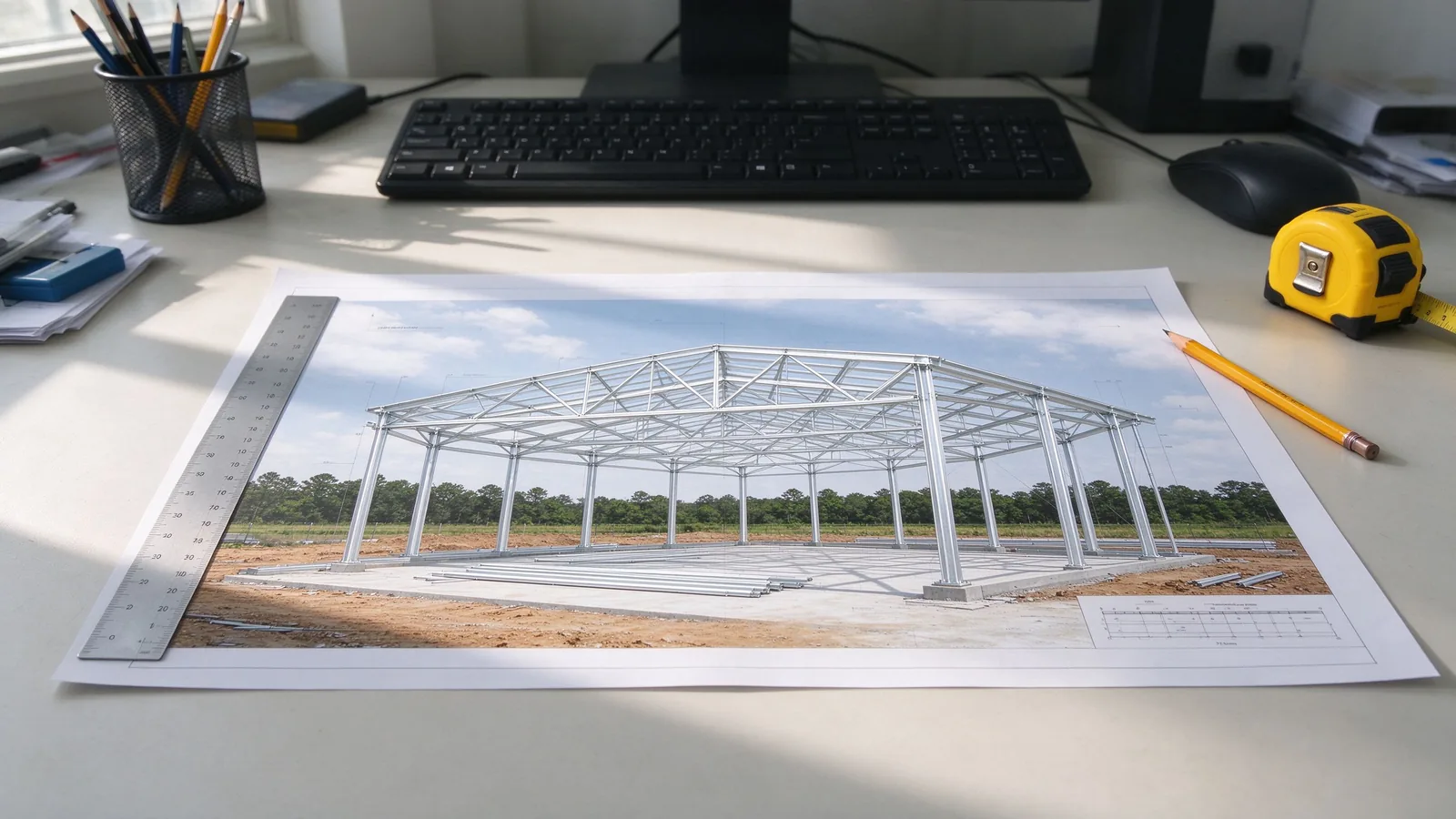
The structure lines
Profile section and wall thickness for beam, blade, post and fascia, stated in millimetres. Alloy and temper, usually 6063-T5 for extrusions. Post spacing and the number of bays. The fixing method at the base and at the wall.
The finish lines
Coating type, powder or anodised, with the RAL reference if a colour is chosen, and the coating thickness in microns. Wood-grain transfer is a separate process and belongs on its own line, because it costs more and behaves differently outdoors.
The glazing or infill lines
Material, thickness, and where it sits in the assembly. On a glass sunroom that means tempered or laminated, the thickness, and whether it is single or double glazed. On a polycarbonate canopy it means solid or hollow, thickness, and the UV layer.
The commercial lines
Quantity, unit price, packing cost, freight terms, lead time measured from drawing approval, payment split, and warranty periods for frame, coating, glass and motors. If a supplier will not put a lead time in writing, that is information too.
The line most quotations leave blank
Packing, and what happens at the destination. A quotation that stops at the port leaves the buyer to discover the cost of a crate, the cost of a local haul, and the cost of unloading a container in a residential street where no forklift can reach. Those are real numbers, and they can be larger than the difference between two frame prices.
Ask for the shipment basis in writing — FOB, CIF, DAP — and ask what the goods are packed in, by set, and roughly how many cubic metres they occupy. Cubic metres decide whether a trial order travels as LCL or waits for a full container, and that decision changes the landed cost more than any line on the frame.
What a low total usually hides
A price that comes back noticeably under the others is rarely a better factory. It is usually one of four things: a lighter wall thickness, a shorter blade span with an extra post, a coating quoted without its process, or a span that quietly breaks the bay into two. Each of those is a legitimate way to make a cheaper structure, and none of them is dishonest as long as the line says so.
The comparison only becomes unfair when the lines are missing. A buyer who asks for thickness, span, coating microns, packing and terms will find the difference on one sheet of paper, and can then decide whether the cheaper proposal is actually the structure they wanted.
Five questions to send back
What is the beam section and wall thickness? How many bays and where do the posts sit? What is the coating process and the micron range? What is packed, and how many cubic metres? What is the lead time, from which event does it start, and what is excluded?
Five questions, one reply, and the second round of quotations comes back comparable. Suppliers who answer all five in a table are usually the ones whose first number was honest.
What should not be in the price
Vague allowances for “fixings” or “extras”, a lump sum freight figure with no port named, and a stated span that contradicts the drawing. Each of those turns into a change order later, and the change order is where the budget goes.
Ask every supplier for the same eight-line structure and the comparison stops being a guess. Our own quotations follow that layout for exactly this reason.
The payment split, and what it protects
A deposit with the order and the balance against the shipping documents is the split most of our orders use, and each half protects something different. The deposit buys material and production time, so the factory commits a line in its schedule. The balance, released when the documents are presented rather than when the goods are promised, keeps the loading and the paperwork on the critical path instead of behind it.
What the buyer should ask for is less about percentages and more about the trigger: what event produces the balance invoice, which documents arrive with it, and what happens if a crate is short. A supplier who cannot answer the third question has not thought about the end of the order.
Line items are also a cost history. When the same structure is quoted again a year later, a supplier who quoted by line can show what moved and why; a supplier who quoted a total can only show a new total. That transparency is worth more than the few percent someone might shave off a lump sum.
Explore the range: Louvered Pergola — sections, finishes and the drawings we send with a quotation.
Keep reading
How to Budget an Aluminium Pergola Project in Five Lines
Budget an aluminium pergola project: the five lines that set the price, where projects overspend, and what to…
Read article →
Deposit and Balance: Payment Terms on an Aluminium Structure Order
Payment terms on an aluminium structure order: deposit and balance, what the documents trigger, L/C when it makes…
Read article →
Louvered Pergola Cost per Square Metre: What Moves the Number
Louvered pergola cost per square metre: the five lines that decide the price, what a rate leaves out,…
Read article →Related notes
- How to Choose a Pergola Size for Your Terrace, With Span Limits
- Aluminium vs Timber Pergola: What Actually Fails First in Year Three
- Sample, Trial Order and MOQ for Aluminium Structures
Working on a project? Send a drawing and we reply from the Foshan plant with a first price. Not sure which line fits — start from the six product lines.