
Aluminium vs Timber Pergola: What Actually Fails First in Year Three
Buyers compare aluminium and timber pergolas on price per square metre, then discover the difference in year three, when the timber one starts to show what the weather has been doing to it. The materials fail in different places, and that matters more than the number on the quotation.
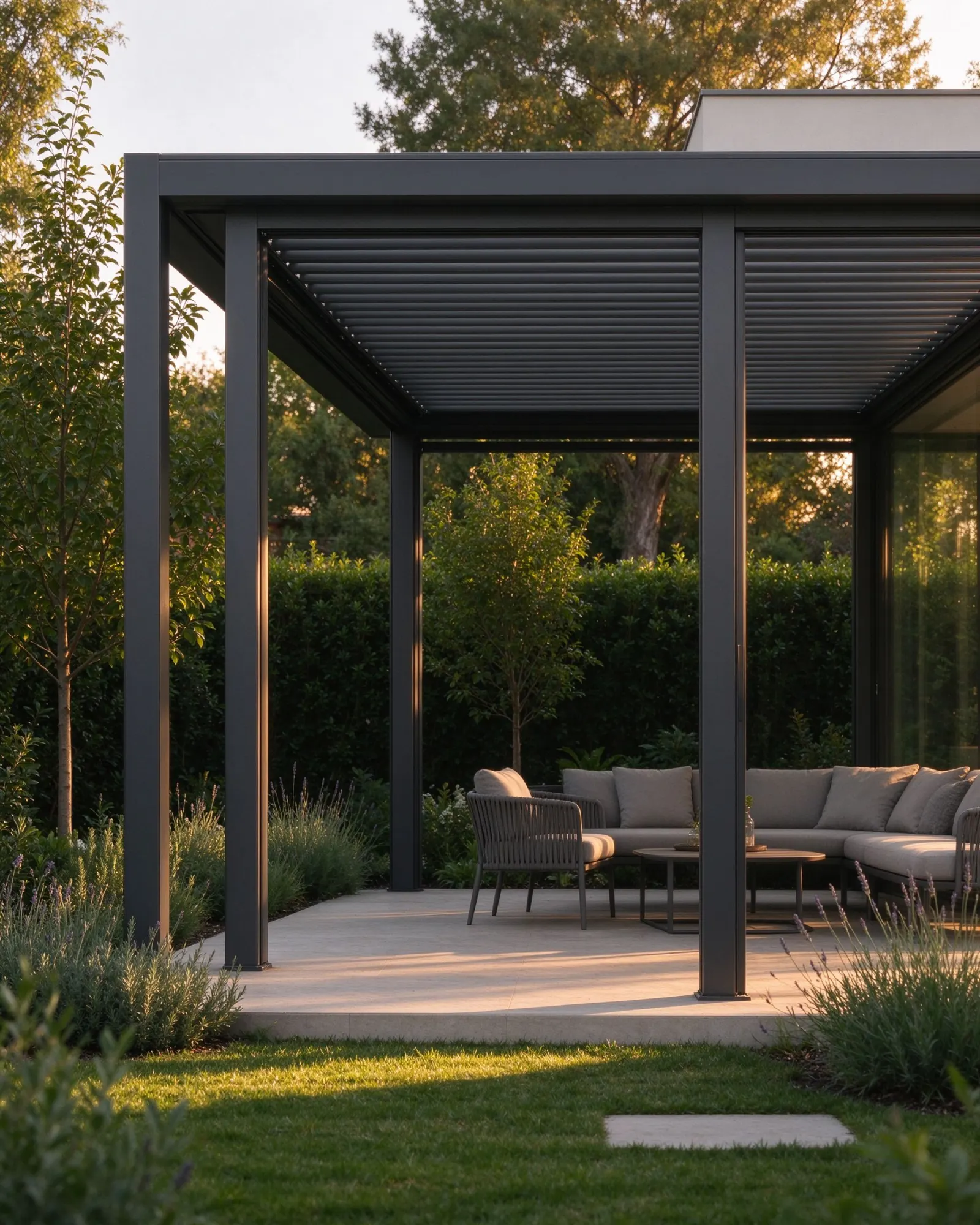
Timber fails at the joint first
Water gets into the end grain of a timber post, or into a joint where two members meet, and stays there. The surface dries, the inside does not. Rot starts at the base plate and at the blade ends, which are the two places nobody inspects until something sags.
A timber louvered roof also moves. Blades swell in a wet season and shrink in a dry one, so the angle that was set at installation is not the angle you have two summers later, and the blades no longer line up when you close them.
Aluminium fails at the fixing, if it is allowed to
An aluminium frame does not rot, which is why it is sold as low maintenance. What it can do is corrode at a fixing between dissimilar metals, or lose its coating where a screw has cut through the surface. Both are installation problems, not material problems, and both are prevented by a detail on the drawing: isolated fixings, sealed washers, no bare aluminium against treated timber.
Finish is the part that decides appearance
Powder coating on aluminium holds colour far longer than a timber stain or oil, and it does not need recoating every two years. Timber needs a maintenance cycle written into the ownership: clean, sand, recoat. Skip it and the structure greys unevenly, which is a look some gardens want and most hotel and restaurant terraces do not.
Where each material is the right answer
Timber earns its place in a garden that is already timber: a deck, a fence line, a shed, a mature planting scheme. A craftsman-built hardwood pergola in that setting looks like it belongs, and the maintenance is part of the garden routine rather than a chore nobody signs up for.
Aluminium earns its place wherever the structure has to keep a specification: a commercial terrace that opens every morning, a coastal site, a project where the client is not the person who will maintain it, and any roof with moving blades, motors or integrated lighting. Machines and coatings belong in a frame that does not change dimension with the weather.
The five-year inspection list
Whichever material is chosen, the same five checks decide whether year five looks like year one. Base plates and the bottom hundred millimetres of each post. Blade ends and the end plates they rotate in. Every fixing that joins two different materials. The coating at the cut ends, where the surface is thinnest. And the drainage channel, which is the part that fails quietly because nobody looks inside a beam.
On aluminium those checks are mostly clean-and-observe. On timber, two of them are repairs.
What the comparison really costs
The honest arithmetic is purchase price plus ten years of maintenance plus the risk of one repair. Timber usually wins the first line and loses the other two. Aluminium wins on a coastal site almost every time, because salt air accelerates everything timber does badly.
If you want the timber look, a wood-grain powder coat gives it on an aluminium frame without the maintenance cycle. If you want real timber, plan the recoating into the budget rather than discovering it later.
What fails between year one and year five
Neither material fails in year one. Aluminium looks finished because it arrived finished, and timber looks best in the first season, before the sun has had a chance to work on it. The divergence starts quietly in year two and becomes visible in year three: timber joints darken at the seams, the bottom of posts holds a damp line after rain, and the stain begins to flake on the surfaces that take the sun.
That timeline is why the conversation about cost belongs in year three rather than at the quotation. A buyer comparing two numbers on day one is comparing a structure that will need nothing with one that will need a weekend of labour, and the weekend repeats. Counting the recoats changes which one looked cheaper.
Salt air shortens every timeline
Within two hundred metres of the sea, timber behaves like an outdoor experiment: salt keeps the surface damp, joints never fully dry, and fasteners show rust at the heads within a season. Aluminium is not immune either, but the coating system is designed for exactly that environment, and coastal installations are the case where the material question is decided before the price is discussed.
Explore the range: Louvered Pergola — sections, finishes and the drawings we send with a quotation.
Keep reading
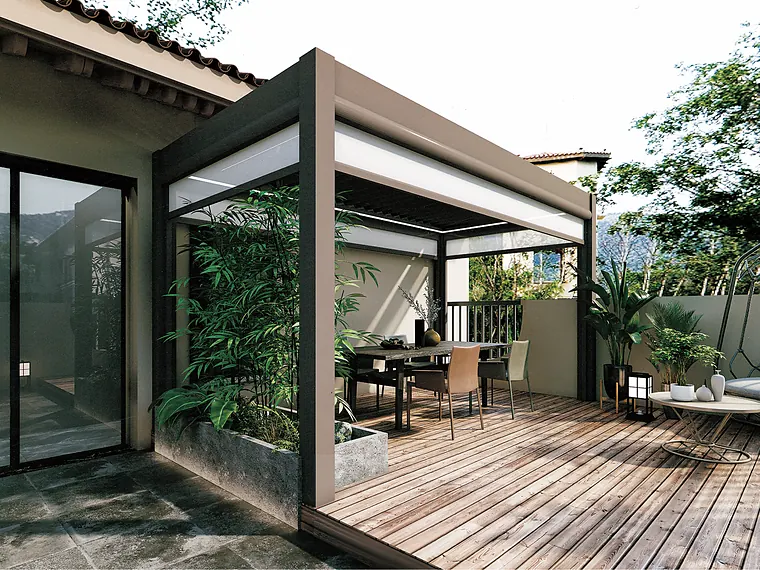
How to Budget an Aluminium Pergola Project in Five Lines
Budget an aluminium pergola project: the five lines that set the price, where projects overspend, and what to…
Read article →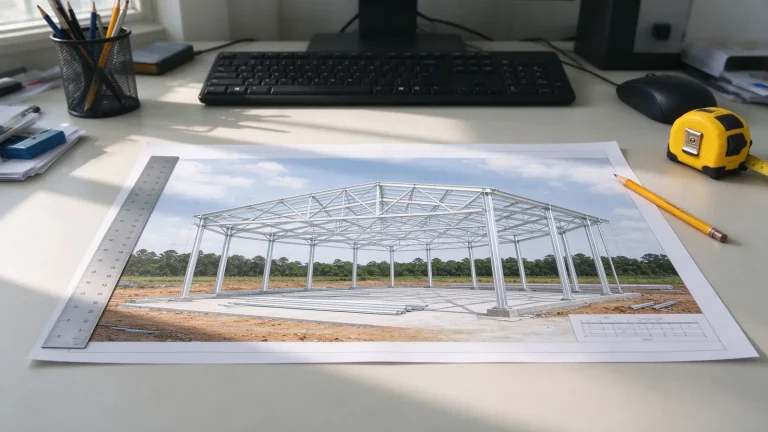
Deposit and Balance: Payment Terms on an Aluminium Structure Order
Payment terms on an aluminium structure order: deposit and balance, what the documents trigger, L/C when it makes…
Read article →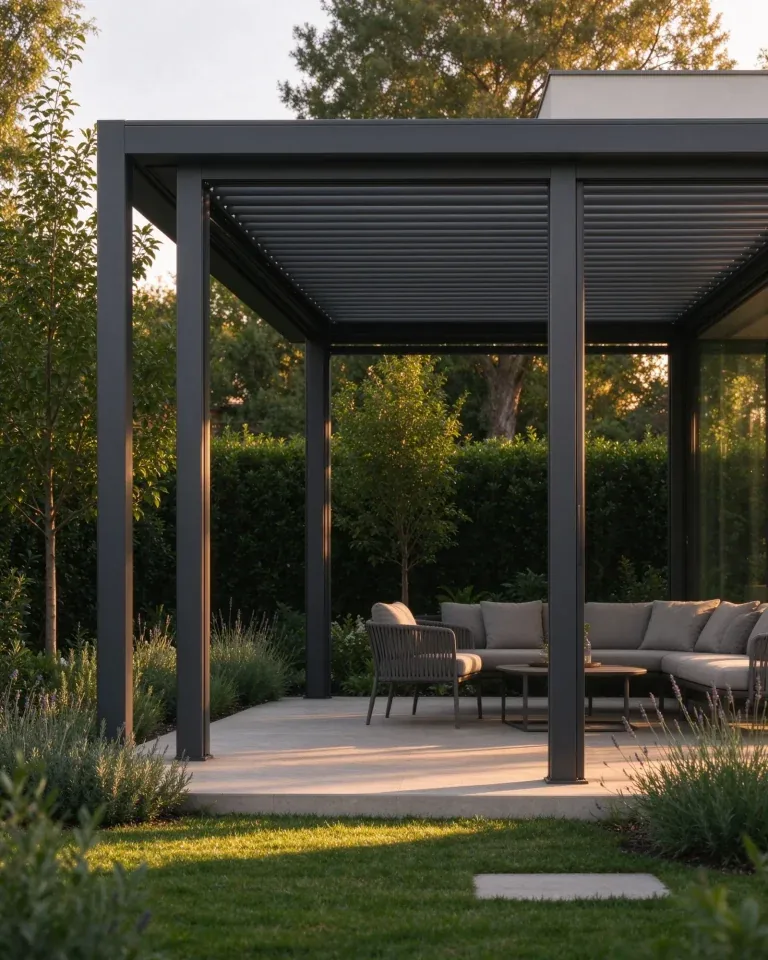
Louvered Pergola Cost per Square Metre: What Moves the Number
Louvered pergola cost per square metre: the five lines that decide the price, what a rate leaves out,…
Read article →Related notes
- Sample, Trial Order and MOQ for Aluminium Structures
- City-Centre Installations: Access, Permits and Working Hours
- Glass Sliding Doors under a Louvered Roof
Working on a project? Send a drawing and we reply from the Foshan plant with a first price. Not sure which line fits — start from the six product lines.