
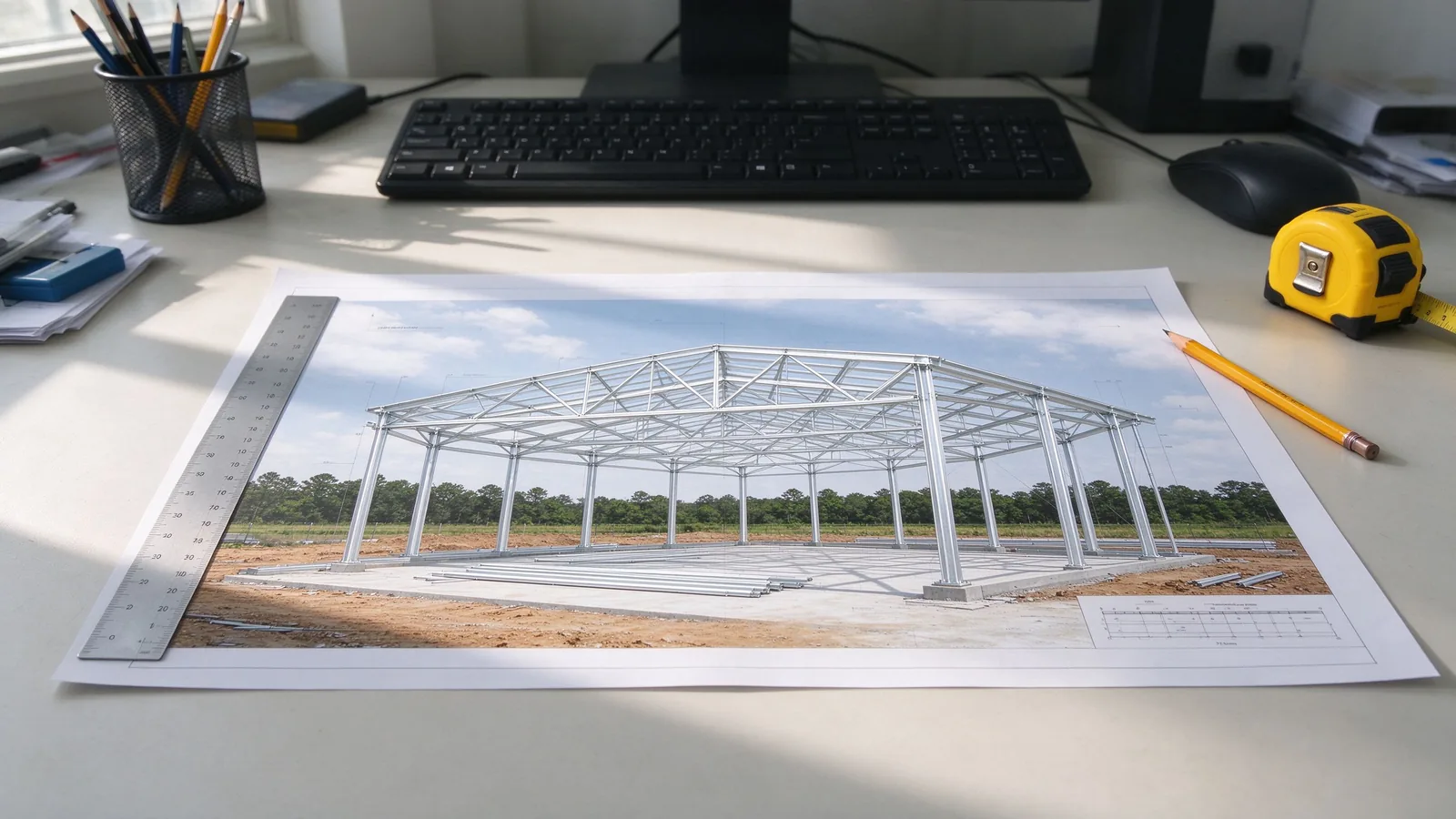
Deposit and Balance: Payment Terms on an Aluminium Structure Order
Payment terms are where a first order either becomes comfortable or becomes a negotiation that neither side enjoys. Most aluminium structure orders from China run on a deposit against the order and a balance against the shipping documents. This note explains what those two lines actually commit each side to, and which details should be written down before the deposit is sent.
The standard structure, and what it protects
A deposit with the order and the balance against the shipping documents is the common arrangement for custom structures. The deposit covers material pulled for a specific drawing: profiles cut to length, blades made to a bay size and a coating batch in a chosen colour. None of that can be sold to another customer, which is why the deposit is not refundable once cutting starts.
The balance against documents protects the buyer: the goods exist, they are packed, they are on a vessel or in a container yard, and the documents prove it. It protects the seller because the material has already been committed for weeks.
What should be written into the terms
- The exact split, as a percentage, not as ’30/70 or similar’.
- What triggers the balance: a copy of the bill of lading, a telex release, or the original documents.
- Which bank charges each side carries.
- What happens if the drawing changes after the deposit — which lines are re-priced, and which are not.
- Who pays storage if the goods sit in the yard because the balance is late.
Why the drawing matters more than the terms
A deposit is sent against a drawing, and the drawing is what the factory cuts to. If the drawing is approved with a bay width that turns out to be wrong on site, the material is already cut and the cost of the change lands on the buyer. This is the single most expensive mistake in custom structure orders, and it is not a payment problem: it is an approval problem.
Ask for the shop drawing, read it against a tape measure on site, and approve it in writing. Then pay the deposit.
Letters of credit, and when they make sense
For a first order between parties who have not traded before, a letter of credit costs money and time but replaces trust with a bank. It suits larger orders where the deposit is a meaningful sum. For small trial orders the bank charges usually exceed the risk, and a deposit with a documents-based balance is simpler.
What we do not do
We do not ask for the full amount before production, and we do not ship without the balance secured. Both are signs of a supplier with no working capital or no confidence in its own packing. If a supplier demands 100 per cent up front on a custom structure, the risk is on the buyer for the whole cycle.
The practical checklist before sending a deposit
Signed drawing, written specification with sections and finish, delivery term, packing method, and a named contact for the balance documents. With those five in place, the payment is a formality rather than a risk.
When the balance can wait, and when it cannot
A balance against documents is a fixed point: the supplier releases the original bill of lading or the telex release when the money arrives. If the goods are already at sea, a week’s delay in the balance does not stop the vessel, but it does stop the release, and the container can sit at destination accruing demurrage that costs more than the delay saved.
If the goods are still in the yard because the balance has not arrived, storage and re-handling become the buyer’s cost, and a container that misses its booked sailing may wait a week for the next one. Both outcomes are avoidable with a date in the order rather than a promise in an email.
Documents that travel with a structure shipment
Packing list with marks that match the crates, commercial invoice, bill of lading, and any certificate the destination asks for. On a structure order the packing list matters more than usual: a container with fourteen crates and no marks means the installer opens the wrong one and the site stops. Marks should name the bay, the set number and the elevation.
What the buyer should receive with the invoice
Three documents make the payment auditable: a signed drawing revision that matches the goods, a packing list whose marks match the crates, and a specification page listing the sections and the coating system. Without them, the terms are a promise rather than a record, and a dispute about a missing part becomes a conversation about memory rather than about paper.
Related: the quotation lines that should sit above the payment terms.
Next step: the three series and their specifications are on the louvered pergola product page. If you already have bay sizes, send them through the contact form for a first price.
Keep reading
How to Budget an Aluminium Pergola Project in Five Lines
Budget an aluminium pergola project: the five lines that set the price, where projects overspend, and what to…
Read article →
Louvered Pergola Cost per Square Metre: What Moves the Number
Louvered pergola cost per square metre: the five lines that decide the price, what a rate leaves out,…
Read article →
Wind and Snow Load: The Three Numbers Buyers Forget to Send
A frame sized for a sheltered garden and a frame sized for a coastal terrace look identical in…
Read article →Related notes
- How to Budget an Aluminium Pergola Project in Five Lines
- Louvered Pergola Cost per Square Metre: What Moves the Number
- LCL or a full container for an outdoor structure order
Working on a project? Send a drawing and we reply from the Foshan plant with a first price. Not sure which line fits — start from the six product lines.