
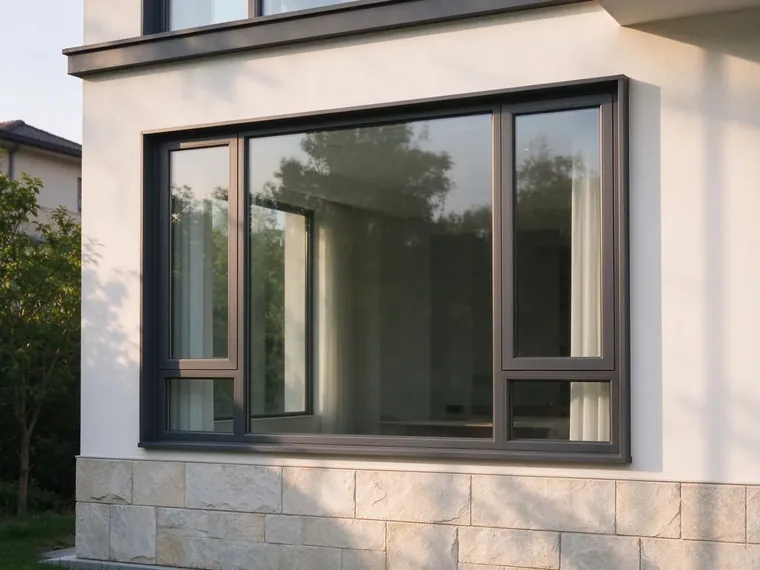
An outdoor aluminium structure leaves the factory as a stack of profiles, panels and small parts, and arrives on site as something a crew can put together in a day. The distance between those two states is not covered by a shipping rate — it is covered by discipline, and most of it happens before the container is even booked.
Stage 1: check against the drawing before anything is packed
Every part is checked against the approved shop drawing: section, length, drilling pattern, finish, and quantity. This is the last moment where a mistake costs a cut and a re-coat rather than a container round trip. Parts that pass are marked with the part reference from the drawing — the same string the packing list will use — so a crew that has never seen the factory can still find the right beam.
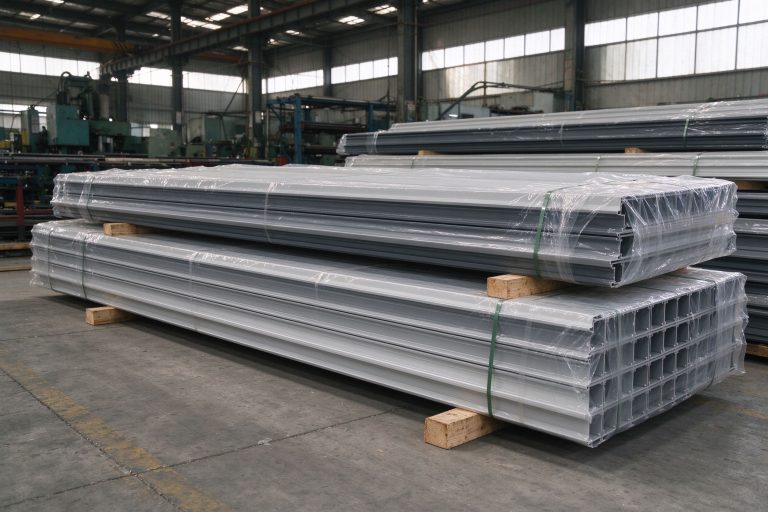
Long members are bundled by function: all main beams together, all posts together, all louvre blades together. Panels are kept apart and, where glass is involved, crated vertically with a standoff between panes. Small fittings — brackets, blade carriers, fixings, touch-up paint — travel in one labelled box per structure, not loose in the container.
Stage 2: packing that assumes the worst leg of the journey
The container is usually the gentlest part of the trip. The rough handling happens at the consolidation warehouse, at the terminal, and on the last-mile truck. So the packing has to assume a crate will be set down on a corner and stacked under something heavier.
That means timber crates rather than stretch-wrapped bundles for anything finished and visible, corner protection on every crate, and internal blocking so the contents cannot slide when the crate is tilted. For sea freight, desiccant in sealed crates where condensation is likely, and no sealed plastic wrapping over a damp profile — that traps water against the coating for six weeks.
Stage 3: loading, and the length problem
Long members go low and flat, so they do not bow across the span under their own weight or the weight above them. Heavier crates sit over the axles. Anything that can shift is strapped to the container’s lashing points, not just wedged. The door end is loaded last so it is the first thing the crew meets — that is also where the fittings box and the drawings should be, because it is the first thing anyone needs.
Length decides the container before the volume does. A 20 ft box gives about 5.9 m internal, a 40 ft high cube about 12.0 m. A 6 m beam either travels in a 40 ft, or is split with a splice designed in, or is loaded diagonally with the packing built around it. That decision belongs on the drawing, not in a message three weeks before shipment.
Stage 4: the paperwork set
A packing list whose marks match the crates, a commercial invoice, the bill of lading, and whatever origin or conformity documents the destination broker asks for. Marks and list must agree on the part reference, the quantity and the crate number — a container held because a crate cannot be identified costs more than the document that would have prevented it.
Stage 5: arrival, and the first hour
The first hour on site sets the tone for the installation. Open the door end, find the fittings box, find the drawings, and check the crate marks against the packing list before anything is moved. Damage is easiest to attribute before the crates are scattered; it is hardest to attribute three days later when the site is full of trades.
Photograph the container as opened, the marks, and anything that looks damaged, before unloading. That set of photographs, plus the loading photographs taken at the factory, covers the whole journey and settles most claims without a surveyor.
Questions worth asking a supplier
- Can you show a packing list and crate markings from a previous shipment?
- How do you protect finished profiles — crate, corner protection, blocking?
- What is the longest single piece, and how is it packed?
- What is supplied in the fittings box, and is there a spare of each consumable?
- What documentation comes with the container, and in what format?
A supplier who can answer these in detail has shipped before and been asked the hard questions. One who answers with “packed safely” has not. Our shipments are documented at this level as standard, and the note on LCL versus a full container explains the freight decision that sits in front of all of it.
Keep reading
EXW, FOB, CIF and DAP for Aluminium Structures
EXW, FOB, CIF and DAP on an aluminium structure order: where responsibility moves, how the term changes packing,…
Read article →
LCL or a full container for an outdoor structure order
It is not only about freight cost. It is about how many times the material is handled before…
Read article →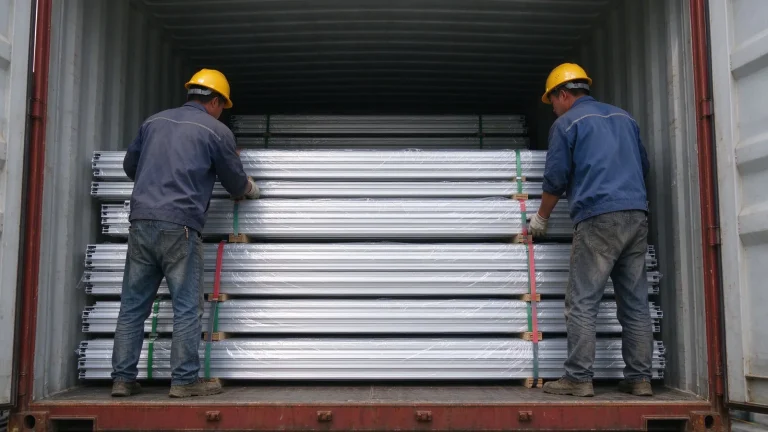
Packing list marks: why the crate and the list must agree
Two documents describe the same shipment. When they disagree, the container waits at the port.
Read article →Related notes
- Why we ask for a dimensioned drawing before anything is cut
- Wall-Mounted or Freestanding Louvre Pergola?
- LED, Screens and Blinds: What to Decide Before the Frame Is Cut
Working on a project? Send a drawing and we reply from the Foshan plant with a first price. Not sure which line fits — start from the six product lines.