
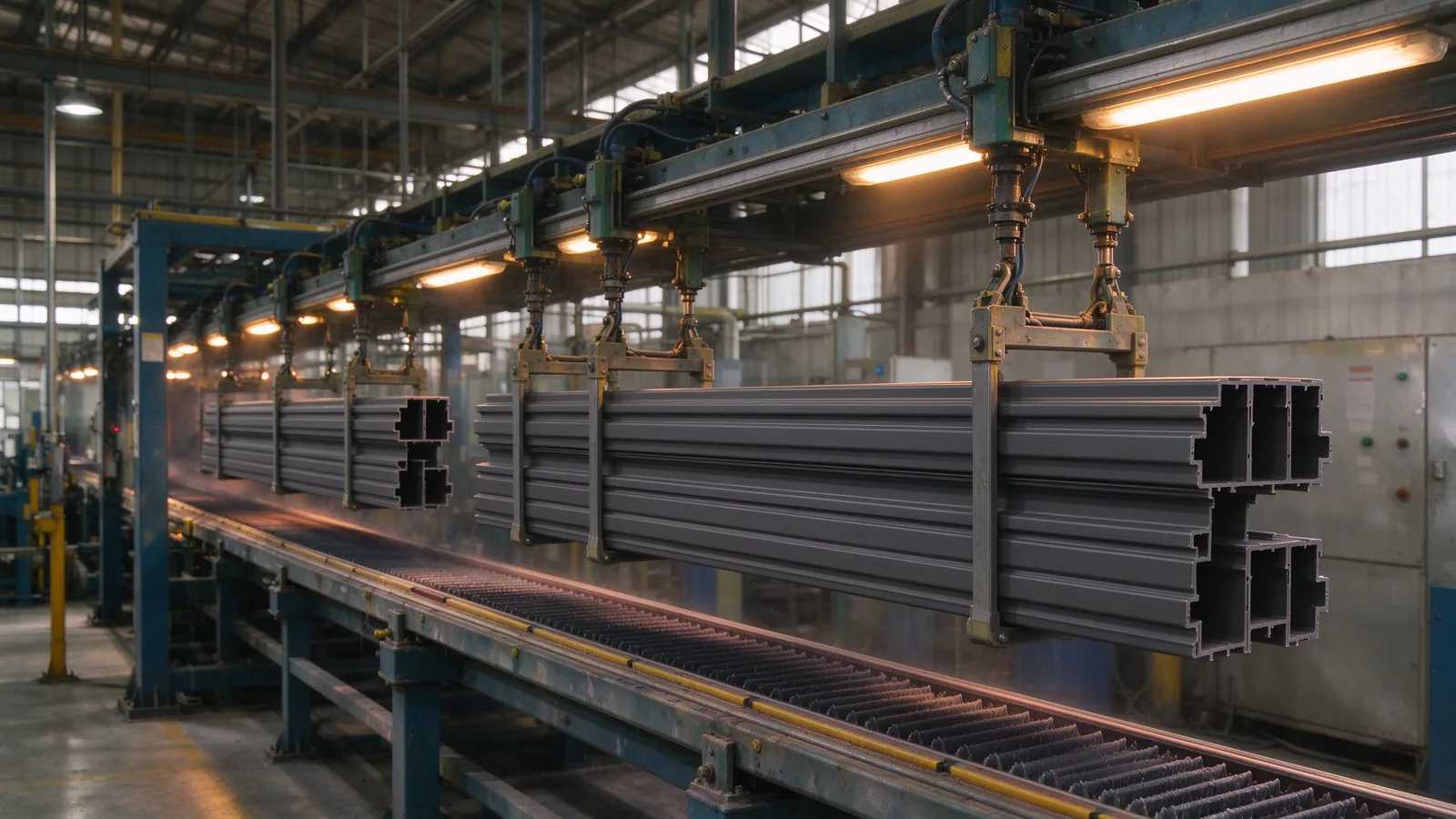
A powder-coated profile does not need much care, but it does need the right care. In our experience most of the damage on finished outdoor structures comes from cleaning, not from weather. A coating is a film roughly 60–80 microns thick sprayed onto an aluminium extrusion and cured at about 200 °C. It is tough enough to sit outside for a decade, but it is thin enough that a scouring pad, a solvent or a pressure washer held too close will take it off in one afternoon.
What actually dirties an outdoor structure
Four things, in roughly this order of frequency: airborne dust and pollen that settle into the grain of the finish; bird droppings, which are mildly acidic and leave a mark if they sit for weeks; salt spray within a few kilometres of the coast; and construction residue — cement dust, plaster splashes, silicone smears — left behind by other trades after the canopy is already up. Each needs a different response, and the last one is where most permanent damage happens.
Routine washing
Water, a soft brush or a microfibre mitt, and a pH-neutral soap. Work from the top down so dirty water does not run over clean panels, rinse thoroughly, and let it dry in the air rather than wiping with a cloth that may still hold grit. A garden hose is enough. If you use a pressure washer, keep the nozzle at least 300 mm from the surface, use a wide fan tip, and never point it at a joint, a seal or a fixing — water driven into a connection is worse than dirt on the outside of it.
Frequency depends on climate rather than on the product. In a dusty or coastal location, two to four washes a year is normal. Inland with clean air and regular rain, once a year plus a rinse after the pollen season is usually enough. What matters more than frequency is not letting anything sit: droppings and salt are harmless on day one and are not harmless on day ninety.
What never to use
Abrasive pads, wire brushes, scouring cream, solvent-based degreasers, thinners, bleach, and any acid-based descaler. The first group scratches the film mechanically; the second attacks the cured resin chemically. Once the film is broken the aluminium underneath is exposed, and corrosion begins in a small, hidden place where you cannot see it until it has spread sideways under the coating and lifted it.
This is also the reason to be careful with “friendly” products: many bathroom and kitchen cleaners contain chelating agents or mild acids that are fine on ceramic and not fine on a cured polyester powder film.
Construction residue, handled properly
Cement and mortar splashes should be removed while they are still soft, with plenty of water and a wooden or plastic scraper. If they have hardened, soak them, keep them wet for ten to fifteen minutes, and work them off with a soft tool. Do not use hydrochloric or muriatic acid wash on the finished structure — it is standard practice on masonry and it will etch the coating. Where a splash cannot be removed without force, it is better to leave a faint mark and touch it up than to scrape a bright patch into the finish.
Silicone and adhesive smears come off with a plastic scraper and a little mechanical patience, not with solvent. If solvent is unavoidable, test it on a hidden section of the same profile first, because some sealant removers will dull the gloss permanently.
Scratches, and when to touch up
Judge by what you can see. If the mark is a light scuff on the surface and the colour is unchanged, it is cosmetic and can wait. If you can see a different colour — silver, grey, bright metal — the film is through and the metal is exposed. That should be touched up in the same season, not at the end of the project, because a repair that waits is a bigger repair.
Touch-up is done with the matching colour in the same system, applied thin, in two coats, feathered at the edges. It will never be invisible on a gloss finish; on a matt or textured finish it is close to invisible at normal viewing distance. The purpose is not cosmetic perfection, it is closing the film so water cannot sit against bare aluminium.
Snow, ice and the things people do in winter
Do not use a metal shovel on a coated surface, and do not chip ice off with a tool. De-icing salt is less of a problem for aluminium than it is for steel, but the salt still collects at the base and in the joints, so a rinse when the season ends is worth the ten minutes. Standing water that freezes in a joint will open a gap over a few winters — the answer is drainage, not more coating.
A short checklist for site teams
- Wash top down, with a neutral soap and a soft brush; rinse and air-dry.
- Remove droppings, salt and cement dust early, while they are soft.
- No abrasives, no solvents, no acid wash, no close-up pressure washing.
- Check for exposed metal after any impact; touch up in the same season.
- Rinse the base and the joints after winter, and check that water still drains away.
How this affects what you order
Finish choice and cleaning instructions should travel together. A matt textured powder coat hides handling marks better than a gloss one and is more forgiving to clean; an anodised finish behaves differently again, because the colour sits in the metal rather than on it. If you are comparing specifications, our note on powder coating versus anodising sets out what actually differs after the second season, and the louvered pergola range page shows the finishes we run in production.
We include the cleaning sheet with every shipment, because the crew that installs the structure is usually the crew that will be asked to look after it.
Keep reading
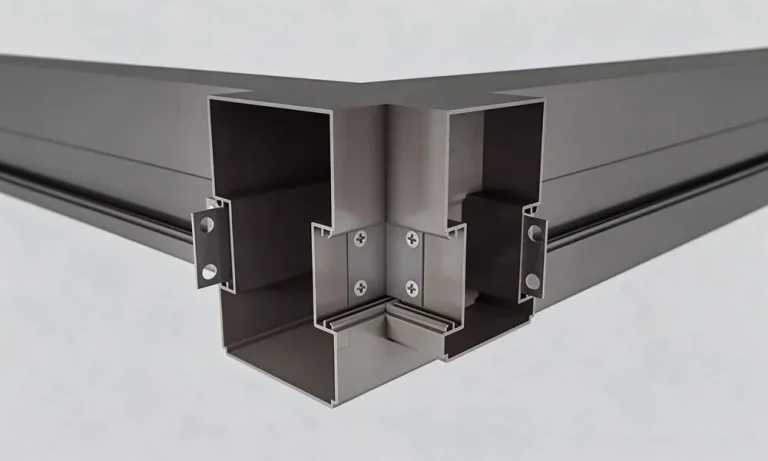
Internal or External Foot: Which Base to Specify
Internal or external foot on a louvered pergola: plate area and anchor access, which detail the wind decides,…
Read article →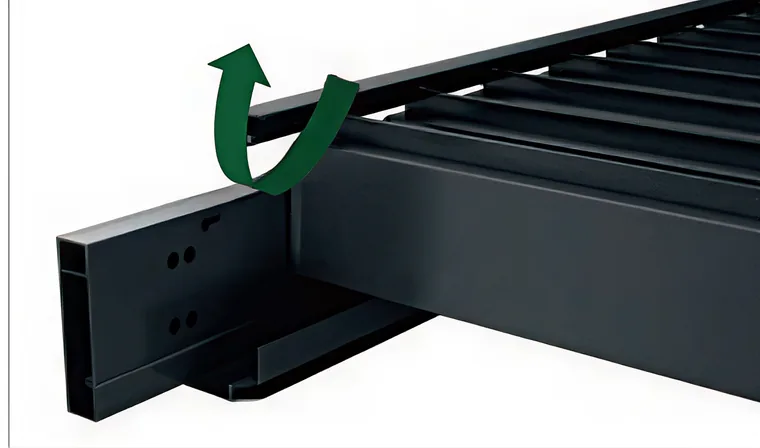
Blade Sections 160×29, 180×35 and 220×45: What Changes
Blade sections on a louvered pergola: 160x29, 180x35 and 220x45, what each spans, how blade count changes shade,…
Read article →
Why two suppliers quote different prices for the same drawing
Same drawing, two quotes, a gap that looks like a mistake. It usually is not one.
Read article →Related notes
- From sketch to shop drawing: how the drawing changes before production
- Why two suppliers quote different prices for the same drawing
- What 6063 and 6061 mean when you are specifying aluminium
Working on a project? Send a drawing and we reply from the Foshan plant with a first price. Not sure which line fits — start from the six product lines.