
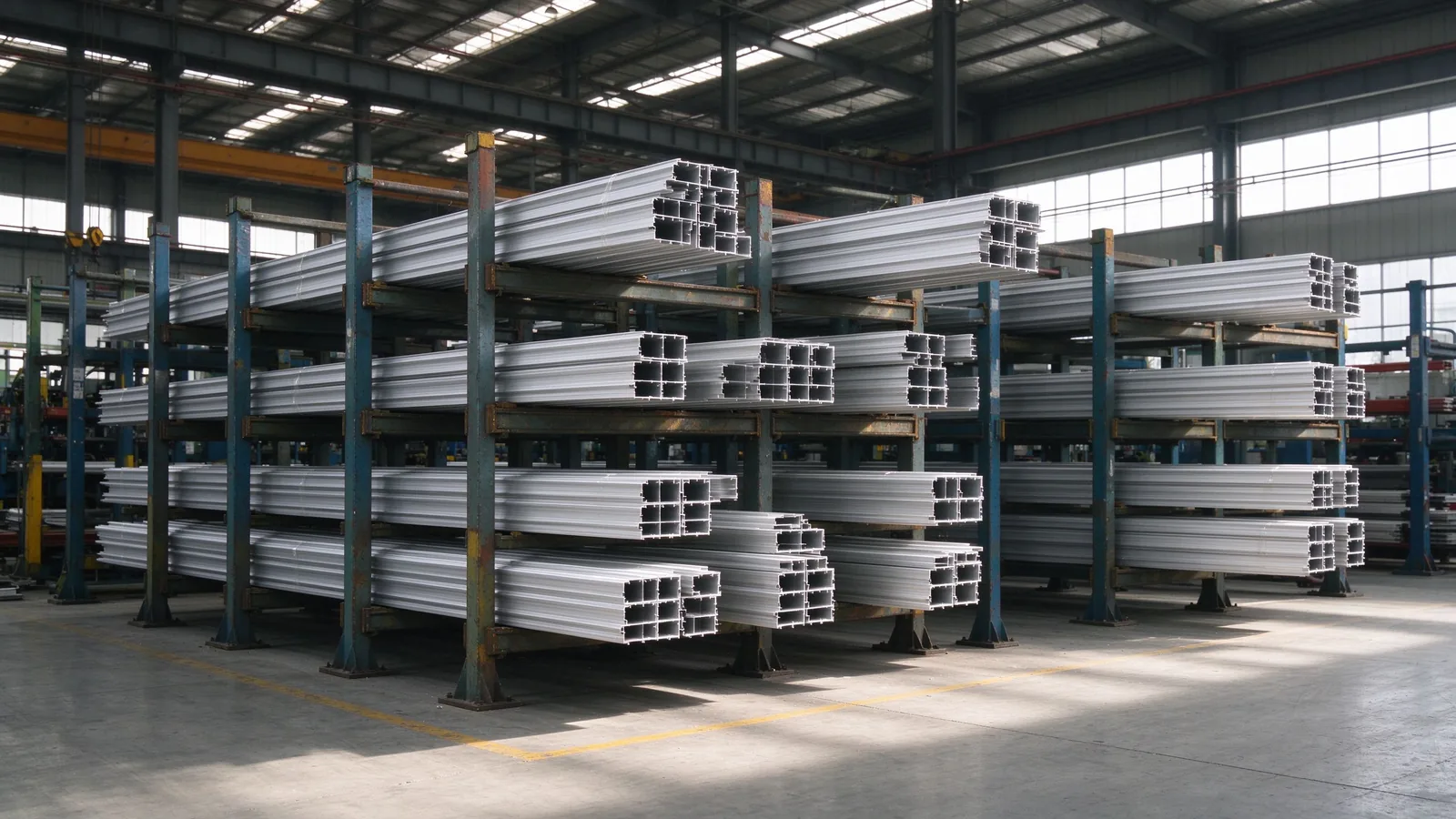
Same drawing, two quotes, and a gap that looks like a mistake. Usually it is not a mistake. It is two different sets of decisions hidden inside one number, and until both quotes are broken down the same way, the cheap one is not a price — it is a question.
What is actually inside a structural aluminium quote
Nine variables, roughly in this order of impact:
- Section and wall thickness. 150×80 at 2.6 mm is a different structure from 120×60 at 1.8 mm, and the aluminium content difference alone can be 20–30% of the material cost.
- Alloy and temper. 6063-T5 against 6061-T6, or an unspecified “aluminium” that turns out to be a lower grade.
- Finish. Film thickness, resin system, and whether every face is coated or only the visible ones.
- Hardware grade. A2 stainless, A4 stainless, or zinc-plated steel with a painted head. On a coastal site this is the difference between a ten-year structure and a four-year one.
- Panels and glass. Polycarbonate thickness and UV co-extrusion, glass type and temper, or a cheaper infill that will yellow in two summers.
- Detailing effort. Whether the supplier builds exactly as drawn, or re-details the connections so the thing can actually be assembled.
- Engineering. Whether wind load and span have been checked, or whether the drawing was accepted at face value.
- Packing. A crate with corner protection and internal blocking, against profiles bundled with stretch film.
- Commercial terms. Incoterm, payment split, warranty, and who pays for a replacement if a part arrives wrong.
Why the same drawing can produce a 30% spread
The first five items are invisible in a photograph and almost invisible in a quotation that lists only “pergola, 4×3 m, dark grey”. A supplier can meet that description at 1.8 mm walls with a 40 micron decorative powder film and zinc-plated fixings, and another can meet it at 2.6 mm with a 70 micron architectural film and A4 stainless. Both quotes are technically correct against the sentence. Only one of them is the product the customer thinks they are buying.
The last four items are where the gap usually comes from in practice: re-detailing hours, a structural check nobody paid for, packing that actually protects, and after-sales. Those are cheap to cut and expensive to discover later.
A fair way to compare
Do not compare totals. Compare line by line against the same scope, and where a line is missing, ask for it in writing:
- Profile section drawing with wall thickness and alloy/temper.
- Finish: system, colour reference, nominal film thickness, faces coated.
- Fixings: grade and where each type is used.
- Panels: thickness, UV treatment, warranty.
- Packing standard: crate type, protection, maximum piece length, loading plan.
- Documents supplied: packing list, drawings, test reports if any.
- Warranty wording: what is covered, for how long, and what voids it.
- Spares: what is supplied for future replacement of a louvre, a blade carrier or a panel.
Quantity changes the answer
On a single unit, the fixed costs dominate: detailing, tooling set-up, crating, documentation. On twenty identical units, material and labour dominate, and the per-unit price falls — but only if the design is genuinely identical. The moment two units differ by a post position, the economies disappear. This is why “the same drawing, five times” is worth far more than five variations of one drawing, and why a supplier will ask you to standardise before quoting a volume.
What a low number usually means
Almost always one of four things: thinner walls, a decorative finish, standard hardware, or a scope that ends at the port gate. None of those is dishonest if it is stated. The problem only appears when a quotation is accepted on a total figure and the specification is never reconciled — then the container arrives, the post feels light, the bracket has a plated bolt, and there is nothing in the paperwork to point at.
What we put in ours
Every quotation carries the section sizes and wall thicknesses, the alloy and temper, the finish with its film thickness, the fixing grades, the packing standard, and the warranty sentence — on the same page as the price. Our commercial terms are the same for every customer: lead time 1–3 weeks from drawing approval, deposit with order and balance against shipping documents, and the coating warranty written into the quotation rather than promised verbally.
If two quotes are close, the drawings usually tell you why. If they are far apart, ask for the breakdown before you decide — the note on sketch to shop drawing shows how much of the difference is decided at that stage.
Keep reading
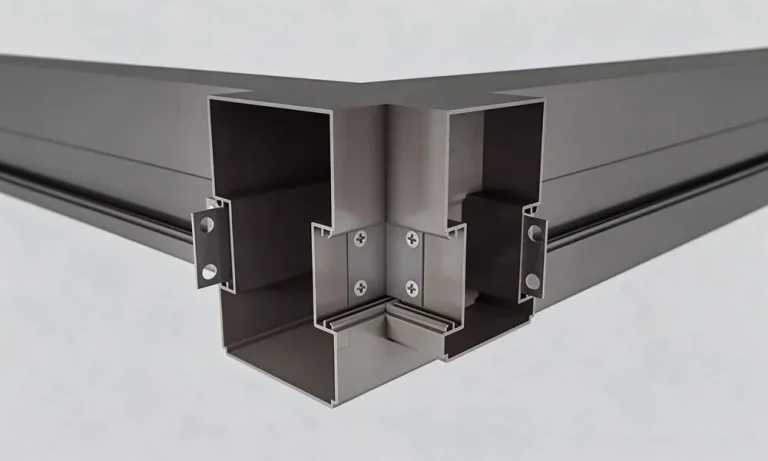
Internal or External Foot: Which Base to Specify
Internal or external foot on a louvered pergola: plate area and anchor access, which detail the wind decides,…
Read article →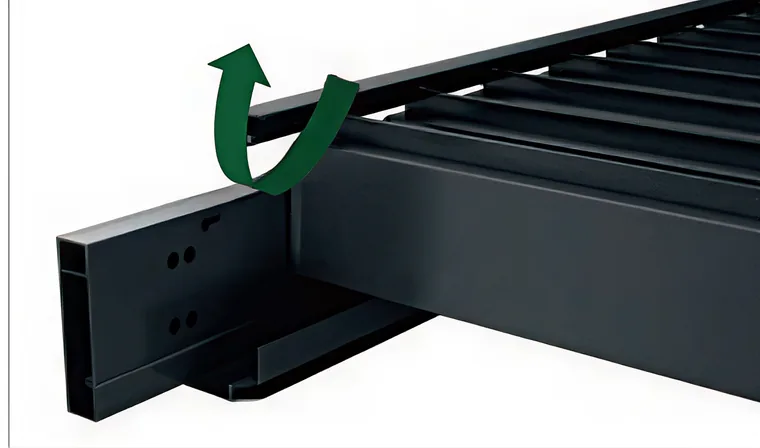
Blade Sections 160×29, 180×35 and 220×45: What Changes
Blade sections on a louvered pergola: 160x29, 180x35 and 220x45, what each spans, how blade count changes shade,…
Read article →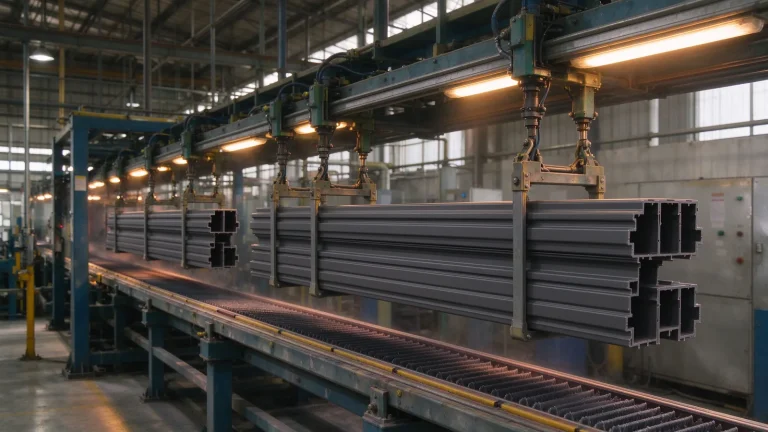
Powder coating vs anodised: what a contractor should actually compare
Both finishes appear on the same drawings and they are not interchangeable. What the difference means after two…
Read article →Related notes
- What 6063 and 6061 mean when you are specifying aluminium
- Powder coating vs anodised: what a contractor should actually compare
- How an outdoor aluminium structure travels from shop to container
Working on a project? Send a drawing and we reply from the Foshan plant with a first price. Not sure which line fits — start from the six product lines.