
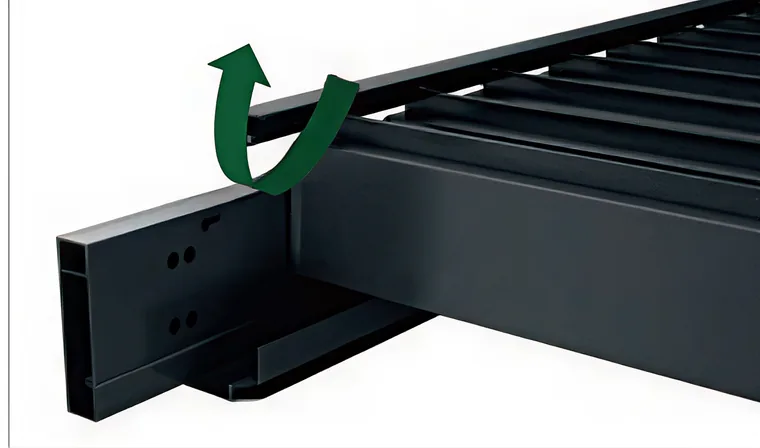
Blade Sections 160×29, 180×35 and 220×45: What Changes
Three blade sections appear in our specification: 160 by 29, 180 by 35 and 220 by 45 millimetres. A buyer comparing quotations sees three sets of numbers and assumes the biggest is the best. The section number is not a quality grade; it is a span tool. What changes between them is how far a group can reach, how much the roof weighs, and what the drive has to move.
160 by 29: the light blade
A shallow section, used on the manual series up to a 4 metre depth. It closes into a thin roof profile and it weighs little, which is why a hand crank can move a whole group on a 3 by 4 bay. The limit is bending: over a longer span the blade sags between beams and the roof loses the flat line that makes a louvered roof look right from the terrace.
This section is not a cheap substitute for a bigger one. On the bay it belongs to, it is the correct choice, and using a heavier blade there would mean heavier beams, bigger posts and a plate that does not need to be that size.
180 by 35: the middle section, and the volume choice
The standard series blade, on bays up to 3.5 by 5 metres. The extra depth over the 160 section is what allows a 5 metre span without visible sag, and 35 mm of section is enough to hold a seal that closes cleanly against the next blade.
This is the section most orders land on because most terraces are between 3 and 5 metres deep. It is also the section where a motor becomes normal: a 5 metre group is a real weight to crank by hand every afternoon.
220 by 45: the deep blade
The heavy-duty series blade, on bays up to 4.5 by 6.5 metres. Depth and width both grow, because a 6.5 metre group has to stay straight under its own weight and under snow, and because the seal face needs to be wider to stay closed across a longer blade line.
The practical consequence is weight. A 6.5 metre group at this section is not something two people lift into place on ladders; it is a lift or a tower job, and the posts and plates grow with it.
What the section actually controls
- Span. The distance between beams that the blade crosses.
- Sag. A shallow blade over a long span shows a curve from below, which is visible every day.
- Seal closure. The blade has to meet the next blade with a clean line; a twisted group leaves a gap.
- Load. Snow and wind act on the blade surface, and a deeper section carries a bigger area.
- Drive torque. Heavier groups need a stronger link bar and, usually, a motor.
How to tell whether the section in a quotation is right
Two questions. What is the maximum bay depth this section is offered at, and what is the beam spacing? A supplier who offers a 160 section at 6 metres is either using a different alloy, a different blade geometry, or not checking. A supplier who cannot state the beam spacing is not describing a system, only a profile.
Ask for the blade count per bay as well. Blade density changes the look and the shading: a 6.5 metre bay with the same blade count as a 4 metre bay has wider spacing and more light between the blades, and the shade it casts is different.
Why the number is written as two dimensions
Width and depth, in millimetres. The width is the visible face when the roof is closed; the depth is the structural height of the blade. Two blades can have the same face width and different depths, and the deeper one will span further. That is why a quotation that lists only one number is a quotation that cannot be compared with another.
The blade count, which the section hides
Two roofs with the same blade section and the same bay can have different blade counts, and the count changes both the shade and the price. A denser blade group shades more but weighs more and costs more per square metre; a wider spacing lets more light through and saves material. Ask how many blades the bay carries and what spacing they run at, because a quotation that lists only the section is not describing the roof the client will sit under.
What a buyer should compare
Compare the section against the bay it is offered for, not against the section in another quotation for a different bay. And compare the section together with the beam and post, because a blade that is strong enough for its span but sits on an undersized beam is a frame that will move under load in a way nobody can see until the blades stop closing cleanly.
Related: how far a louvre can span without a centre post.
Next step: the three series and their specifications are on the louvered pergola product page. If you already have bay sizes, send them through the contact form for a first price.
Keep reading
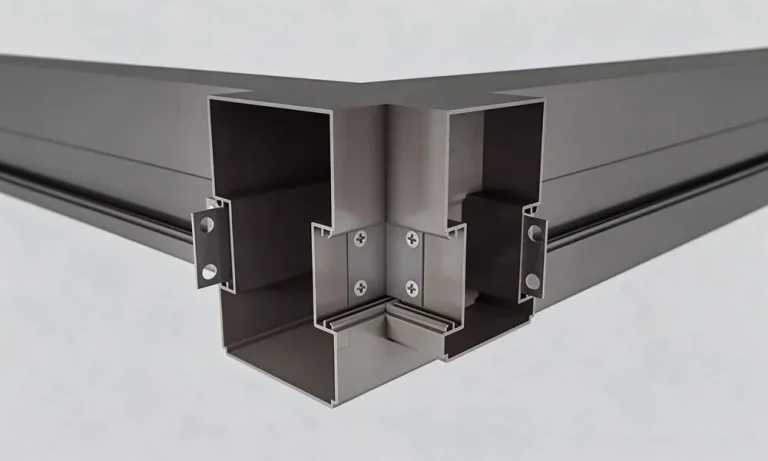
Internal or External Foot: Which Base to Specify
Internal or external foot on a louvered pergola: plate area and anchor access, which detail the wind decides,…
Read article →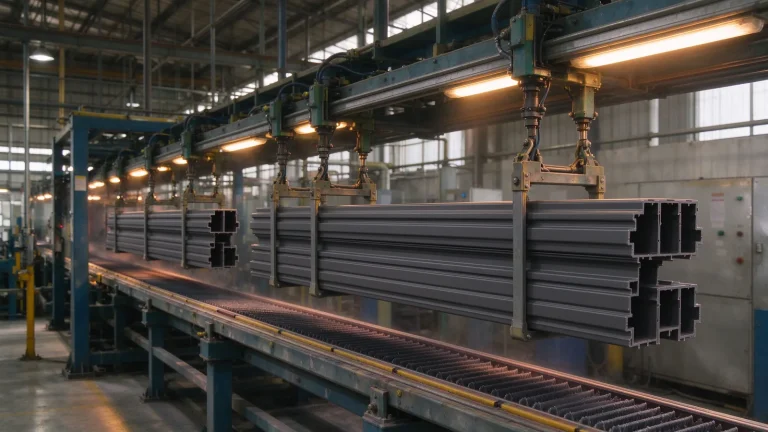
Powder coating vs anodised: what a contractor should actually compare
Both finishes appear on the same drawings and they are not interchangeable. What the difference means after two…
Read article →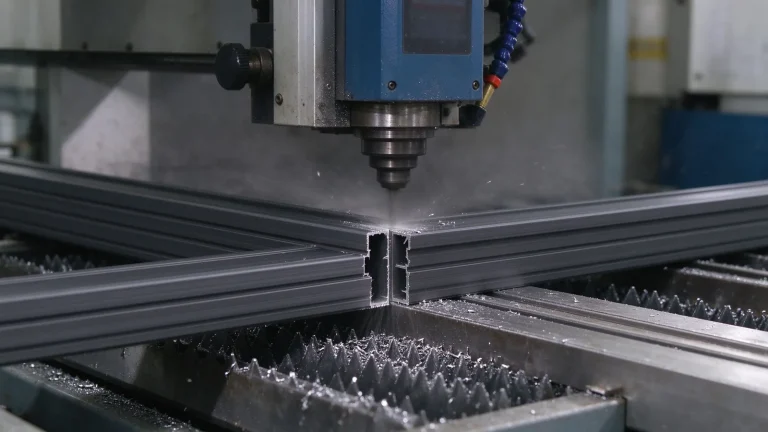
What 6063 and 6061 mean when you are specifying aluminium
Two extrusion alloys, two different jobs. Why the number on the drawing matters more than the colour.
Read article →Related notes
- The Three Span Classes: 3×4, 3.5×5 and 4.5×6.5
- Snow on a Louvered Roof: Load, Clearing and Drainage
- Coastal Installations: Salt Air, Fixings and the Five-Year Check
Working on a project? Send a drawing and we reply from the Foshan plant with a first price. Not sure which line fits — start from the six product lines.