Applications

Where a louvered roof earns its keep

Five settings, and what decides the layout in each: the clear span you need, the base you are fixing to, where the water has to go, and whether the roof can hang on a wall.

Garden terraces

The domestic case that most enquiries start from: a seated area behind the house, a walkway that has to stay open, and four posts that must not land on a paving joint.
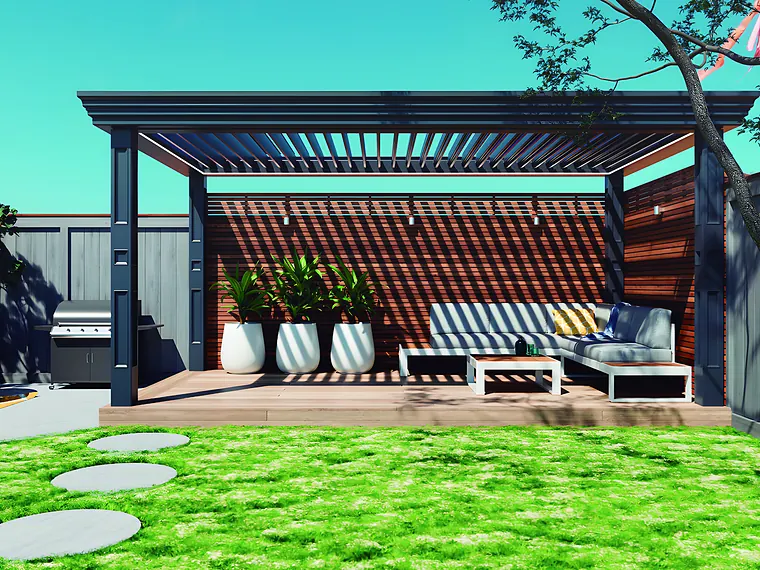
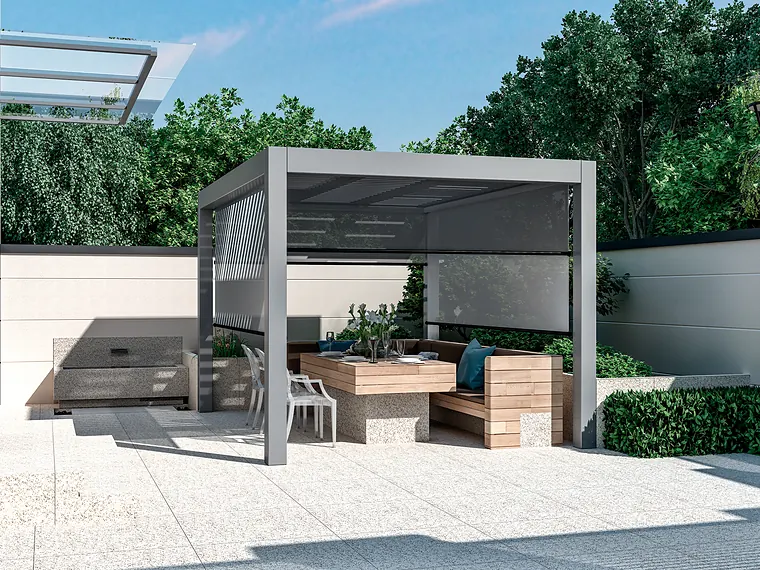
Louvered pergola with a slatted side screen over a garden seating area
Garden seating with a slatted screen closing the side that takes the low evening sun.
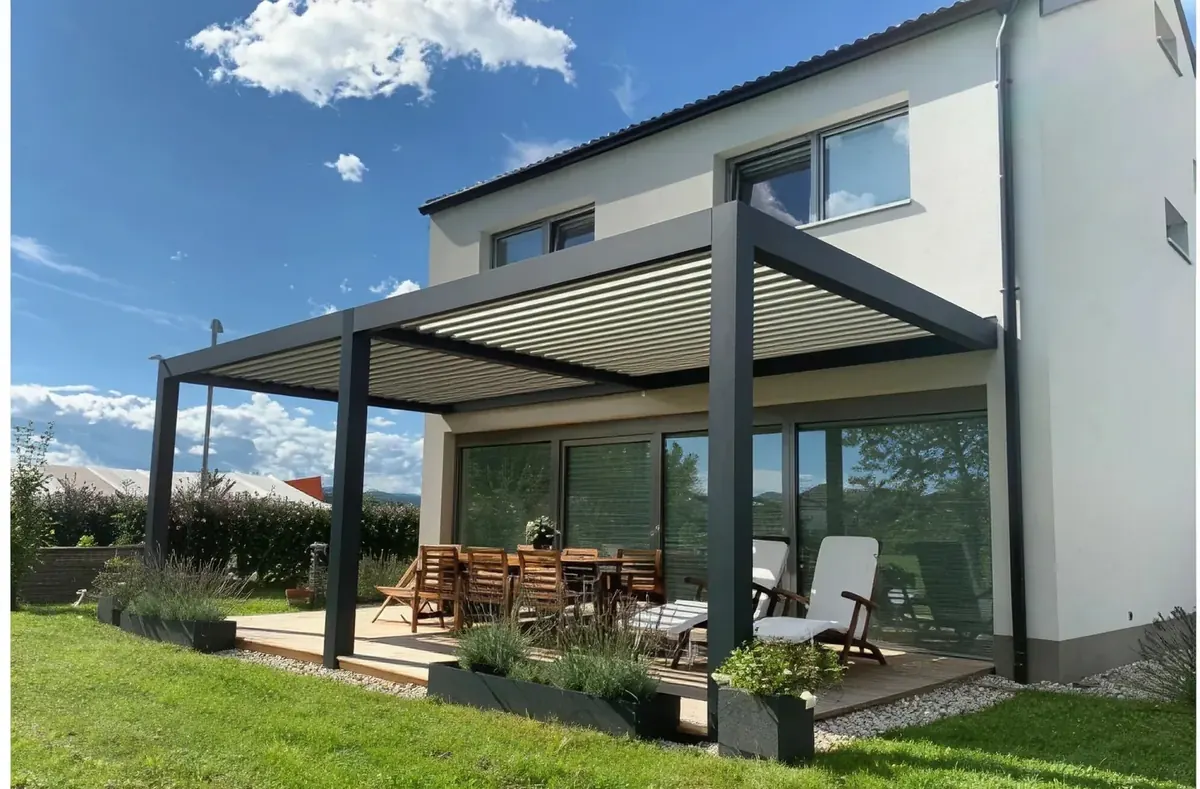
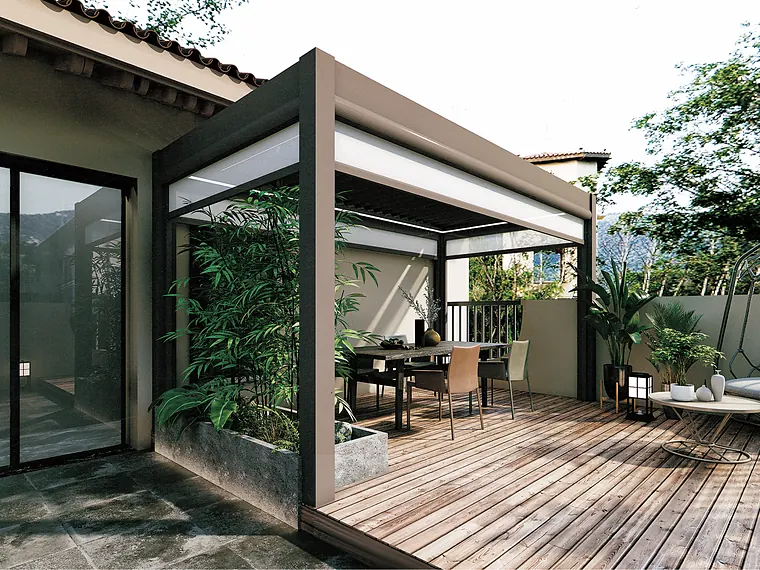
Louvered pergola on a house terrace with four posts
Freestanding bay on a house terrace, posts set inside the paving edge so no plate straddles two slabs.
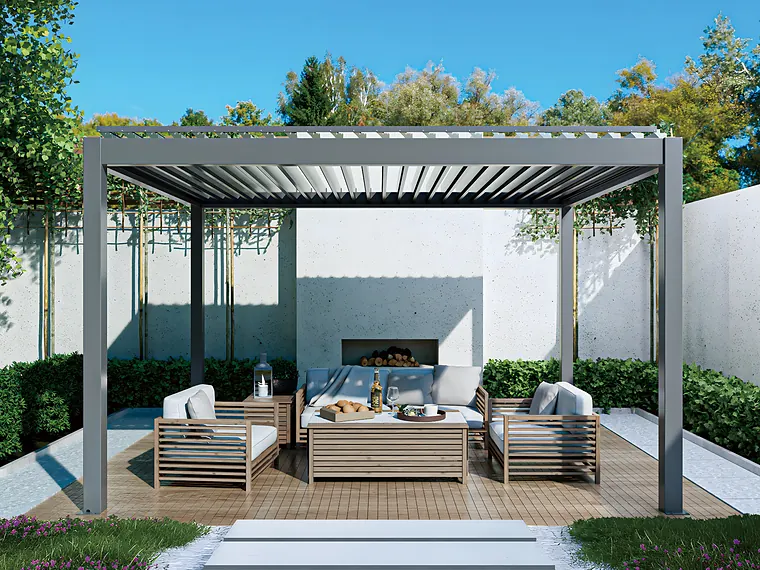
Louvered pergola in an enclosed courtyard
Courtyard bay where the fall runs to one end because there is no second wall to drain from.
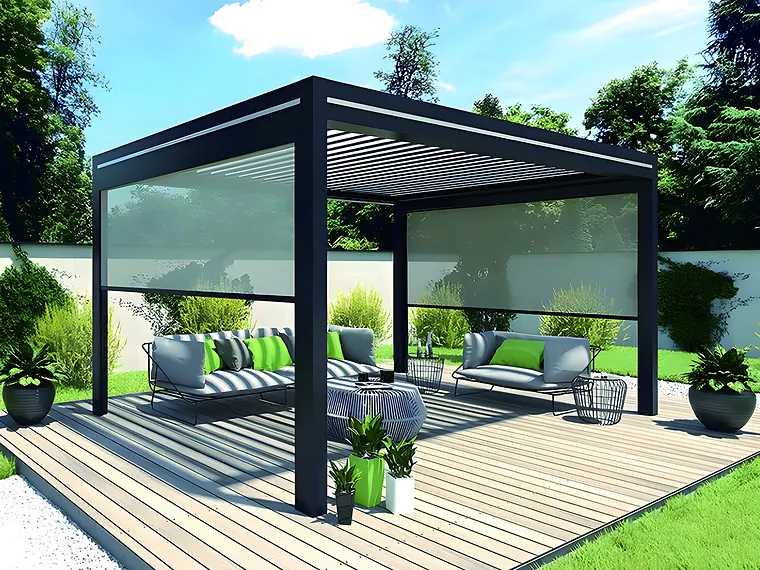
Garden sofa set under a louvered pergola
A lounge set that stays out all summer: closed blades before rain, tilted blades for shade.

Poolside and glazed bays

Glass is added to the frame, not to the outside of it. These bays need a rebate, a sill drainage line and an anchor schedule that expects salt and water at the base.
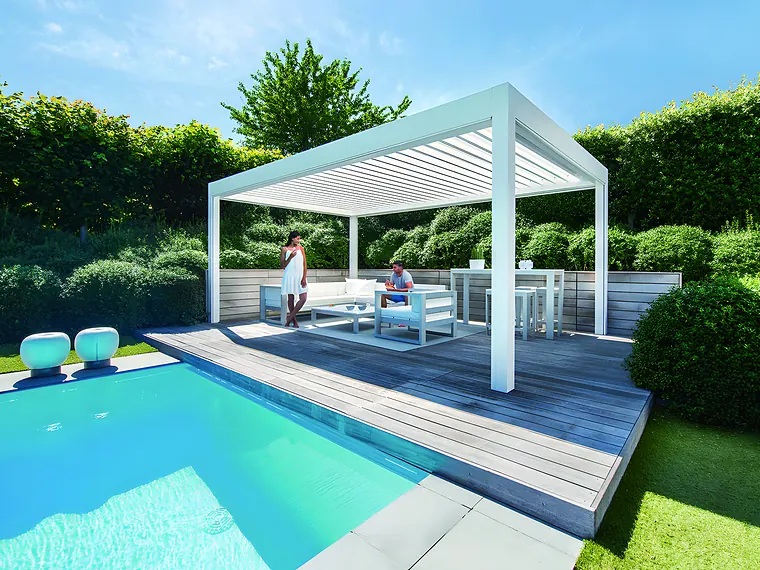
White louvered pergola beside a swimming pool
Poolside bay in white: colour choice is about heat and glare as much as aesthetics.
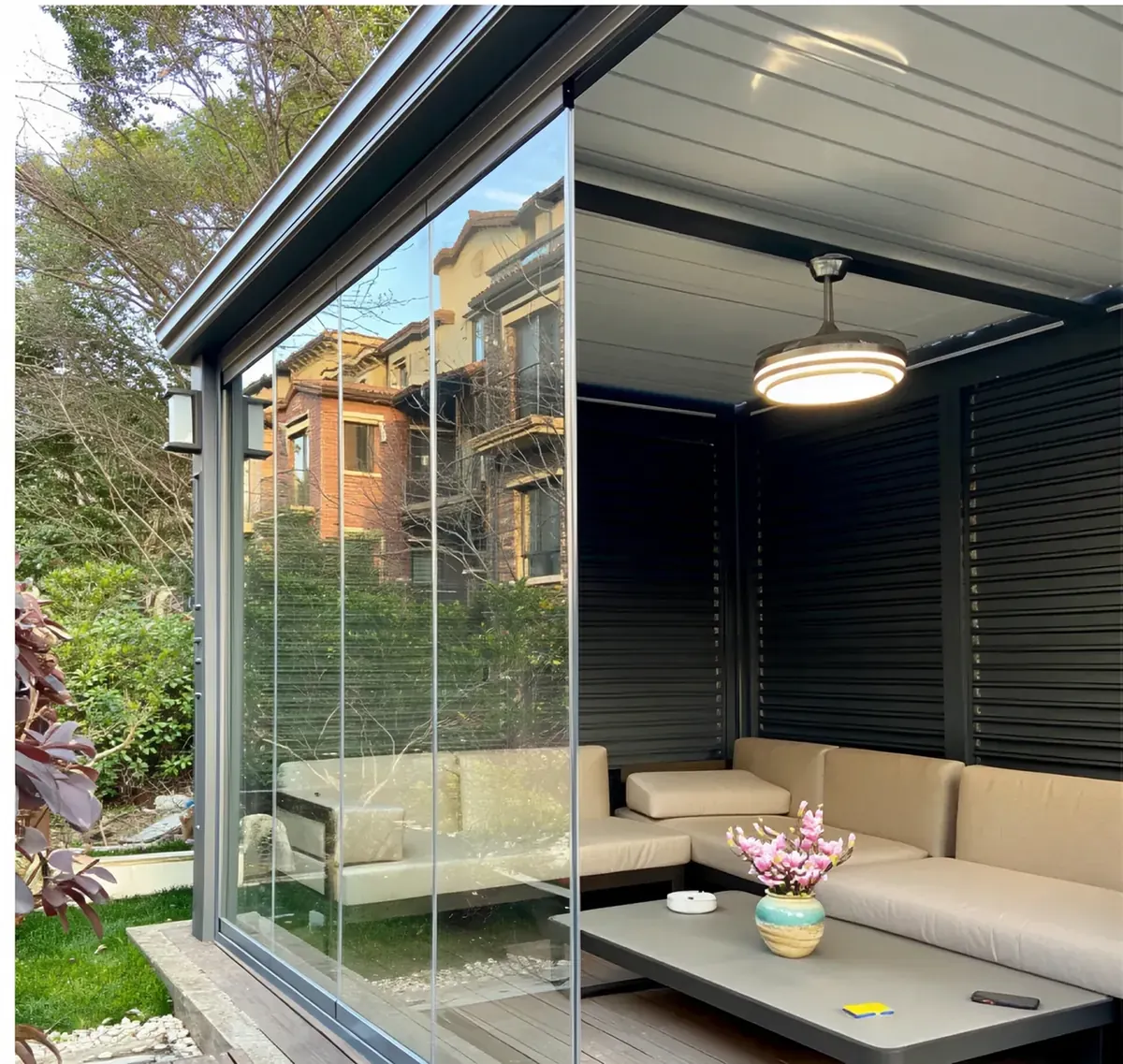
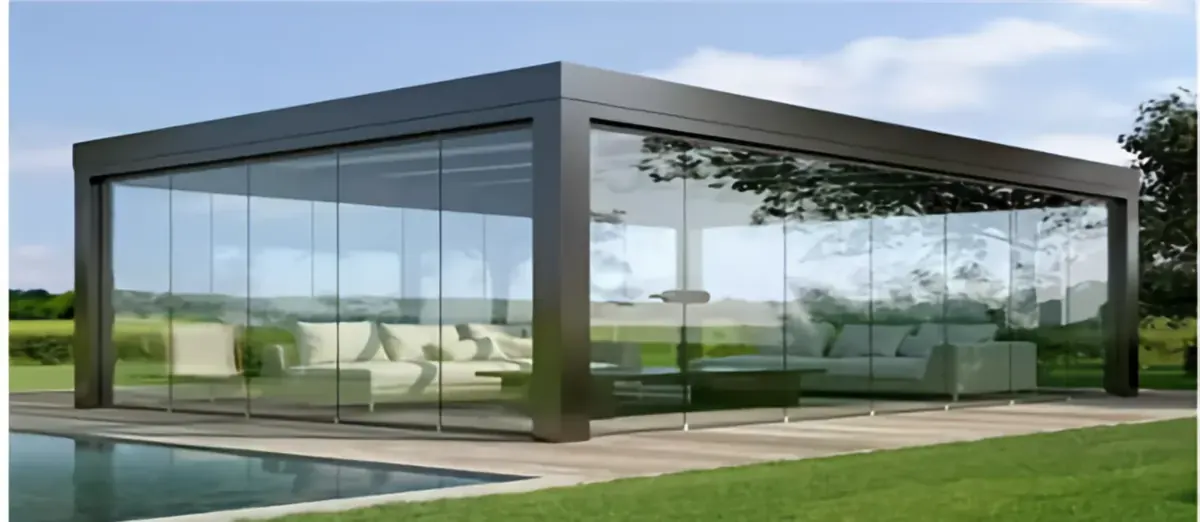
Louvered pergola enclosed with fixed glass panels
Fixed glass on three sides, with the roof left to tilt: a garden room that is still a roof.
Glass sliding doors under a louvered roof
Sliding doors instead of fixed glass, so the enclosure opens in the shoulder season.

Restaurants, hotels and frontage

Commercial terraces are sized by seating not by span, and the roof is worked every day. Zones, motors, sensors and access for a delivery truck all belong in the enquiry.
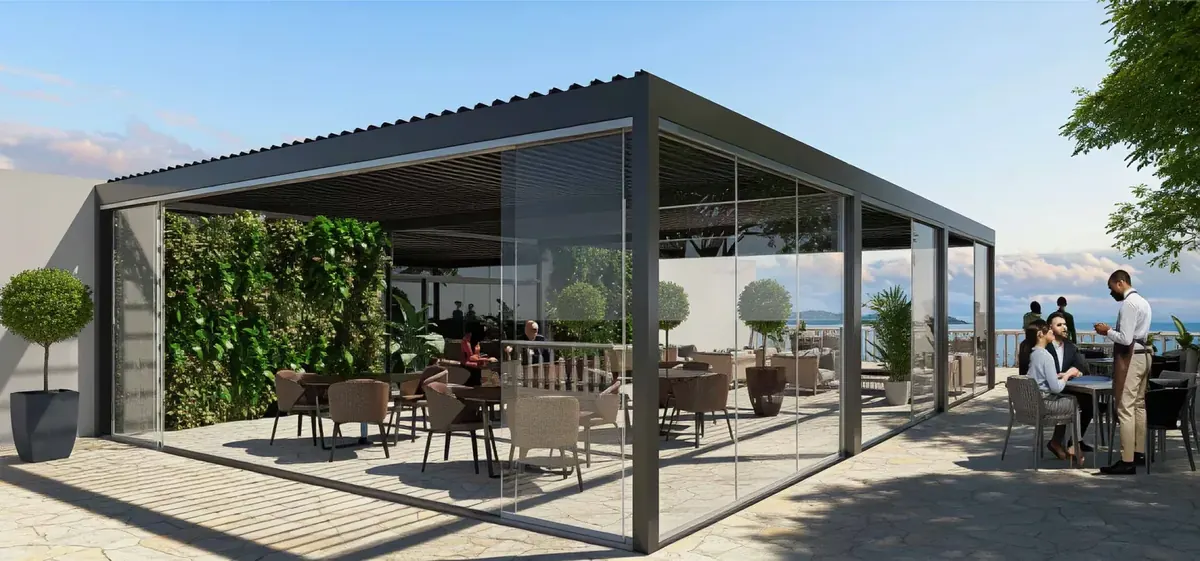
Louvered pergola over a restaurant terrace with several tables
Restaurant terrace: two zones and a rain sensor keep the tables usable without a staff routine.
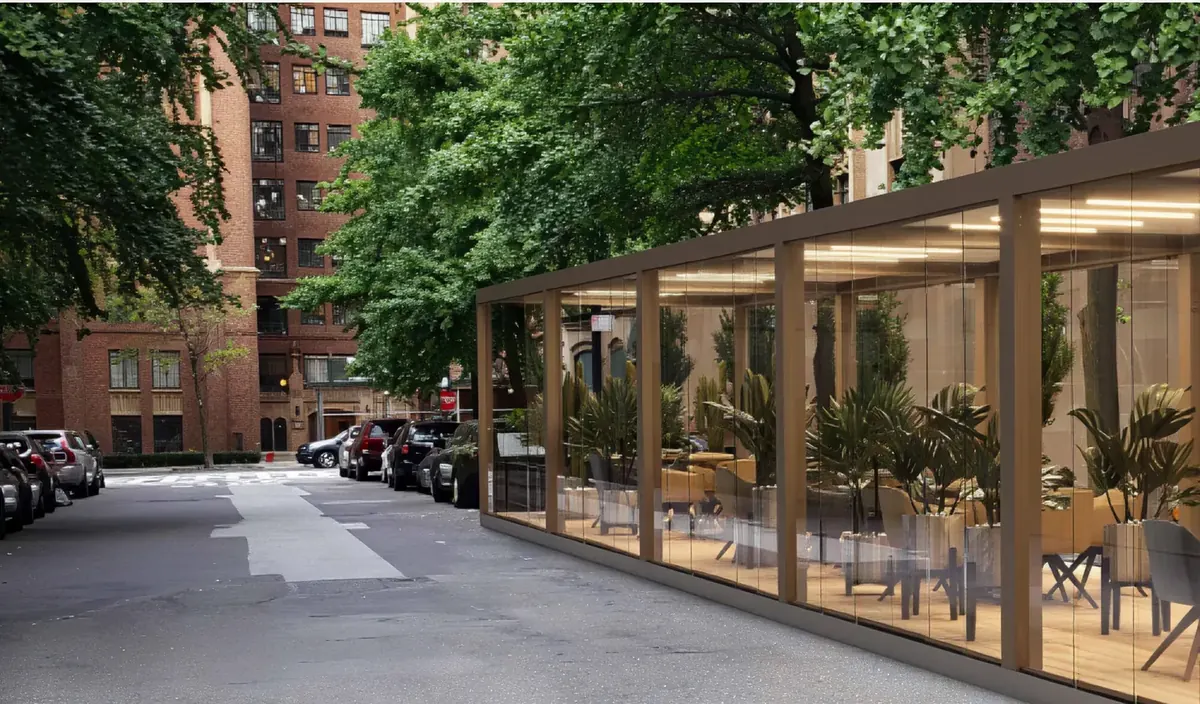
Glass-enclosed louvered pergola on an urban street frontage
Street frontage where the frame has to read as part of the building, not an addition.
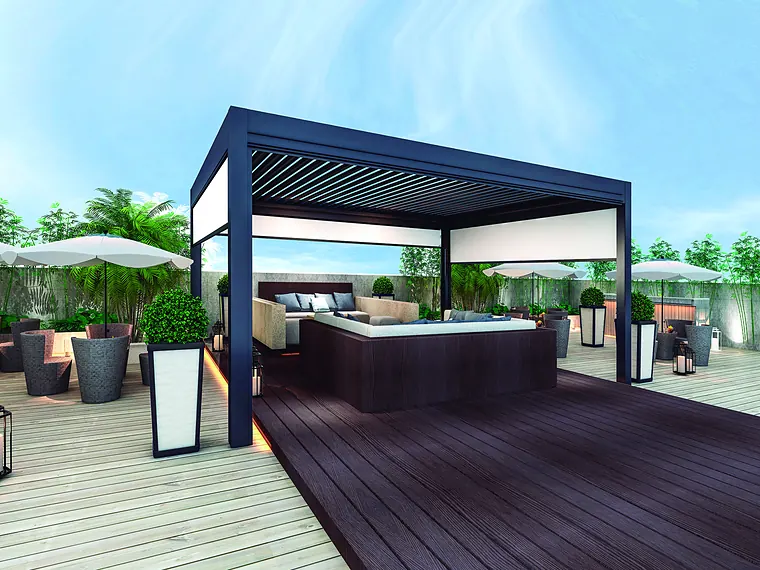
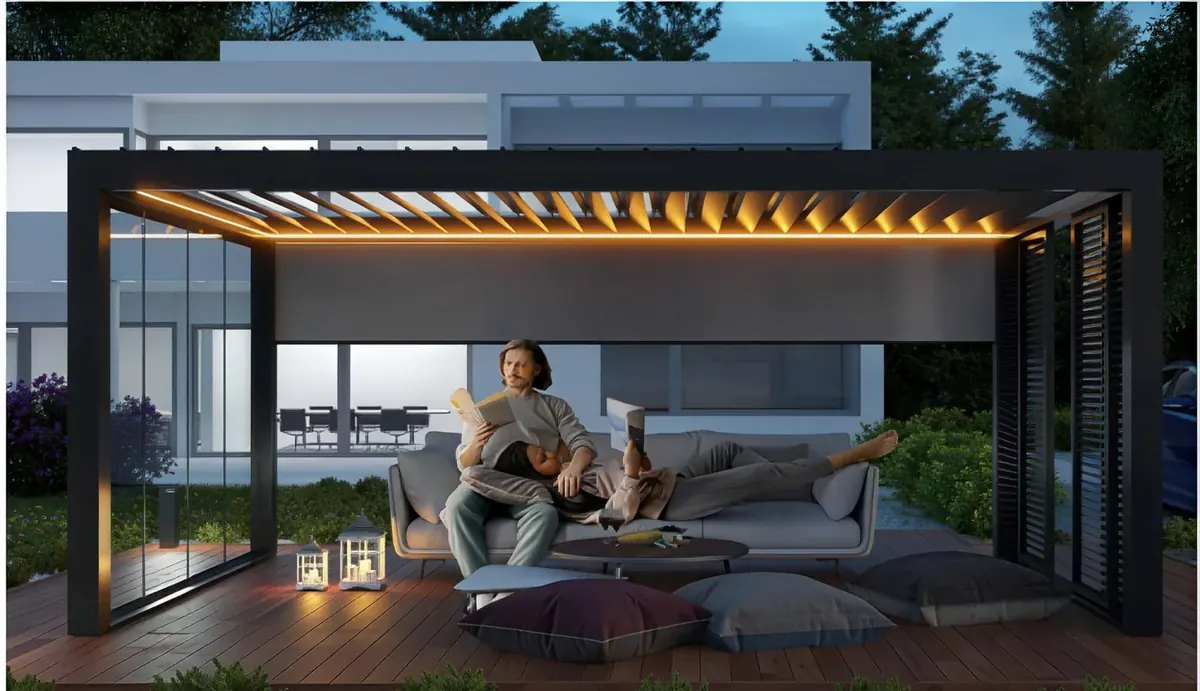
Lit louvered pergola over a lounge at dusk
Evening trade: LED inside the perimeter beam, decided before the frame was cut.
Louvered pergola lit at night with lounge seating
Hospitality lounge at night: lighting, screens and blades set for the hour, not the season.

Coastal and exposed sites

Salt air decides the finish, and exposure decides the anchors. On these sites the specification is written before the price is discussed.
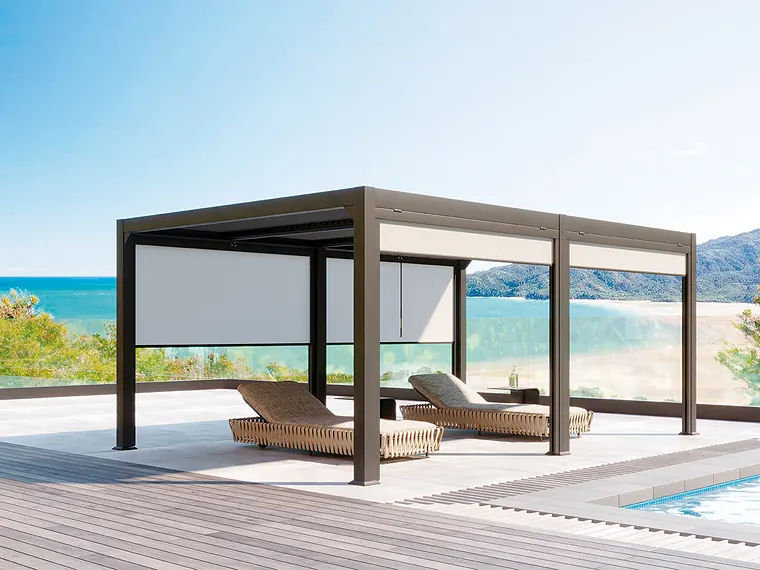
Louvered pergola on a seaside deck
Seaside deck: thicker film, full conversion coating, and washed down twice a year.
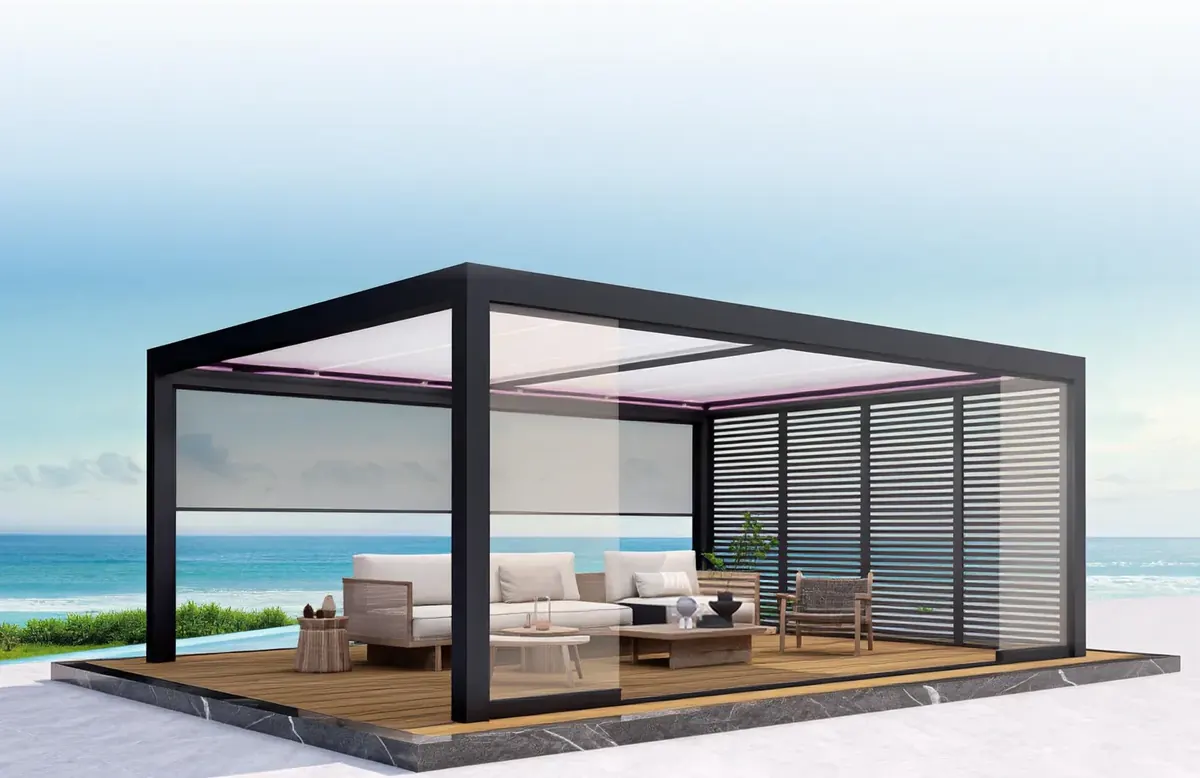
Louvered pergola on a beach terrace
Beach terrace, where every base plate sits on a poured pad rather than on compacted sand.
Wall-mounted louvered pergola on a house facade
Wall-mounted on an exposed facade: the anchors have to reach the structural leaf, not the render.

Wall-mounted and tight spaces

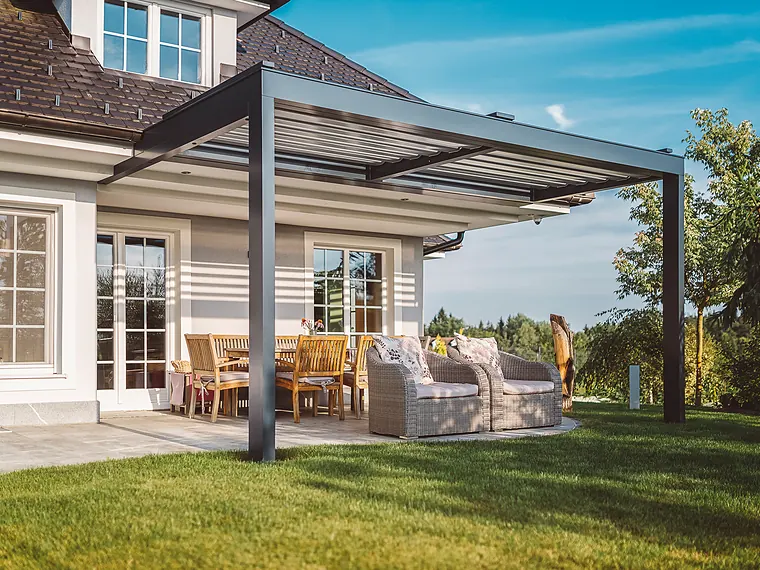
Two posts instead of four keeps the walkway. The trade is that the wall has to carry its share, and the fall has to run away from the house.
Louvered pergola attached to a house wall
Attached bay where the terrace had no room for a fourth post.
Louvered pergola over an entry walkway
Entry walkway cover: a narrow bay, one downpipe, and clearance checked against the door head.
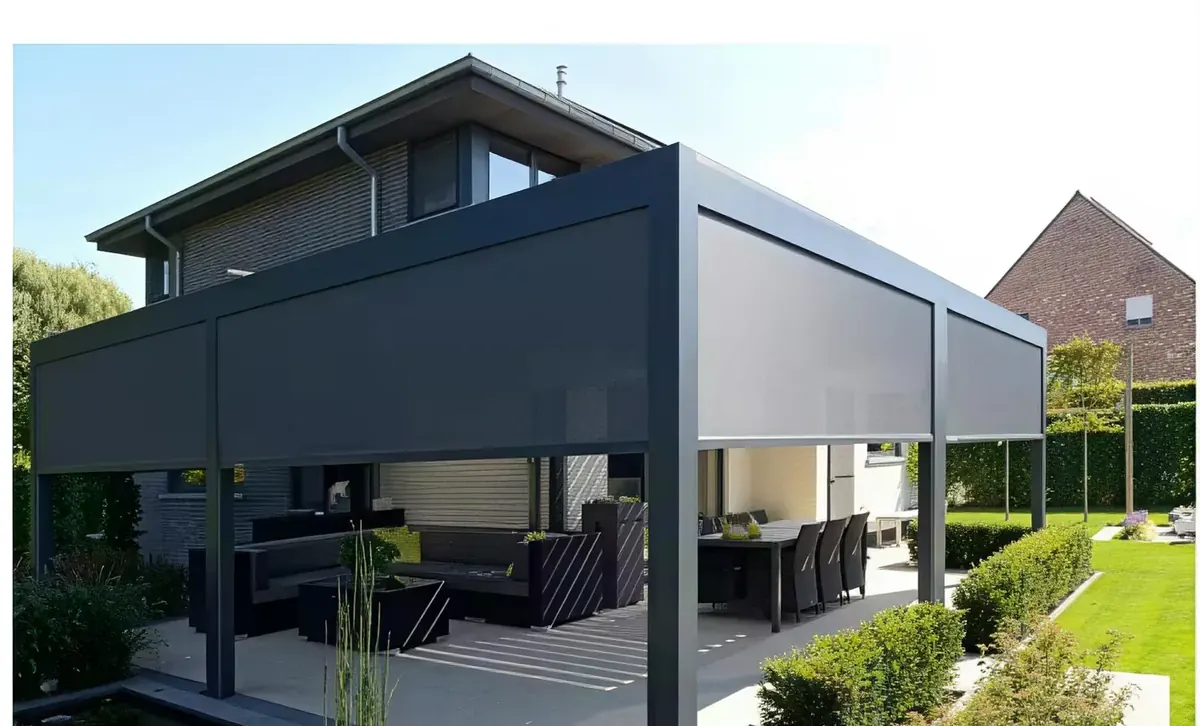
Pergola with drop blinds on a terrace
Drop blinds on a narrow terrace: brackets fixed at the factory, not drilled on site.
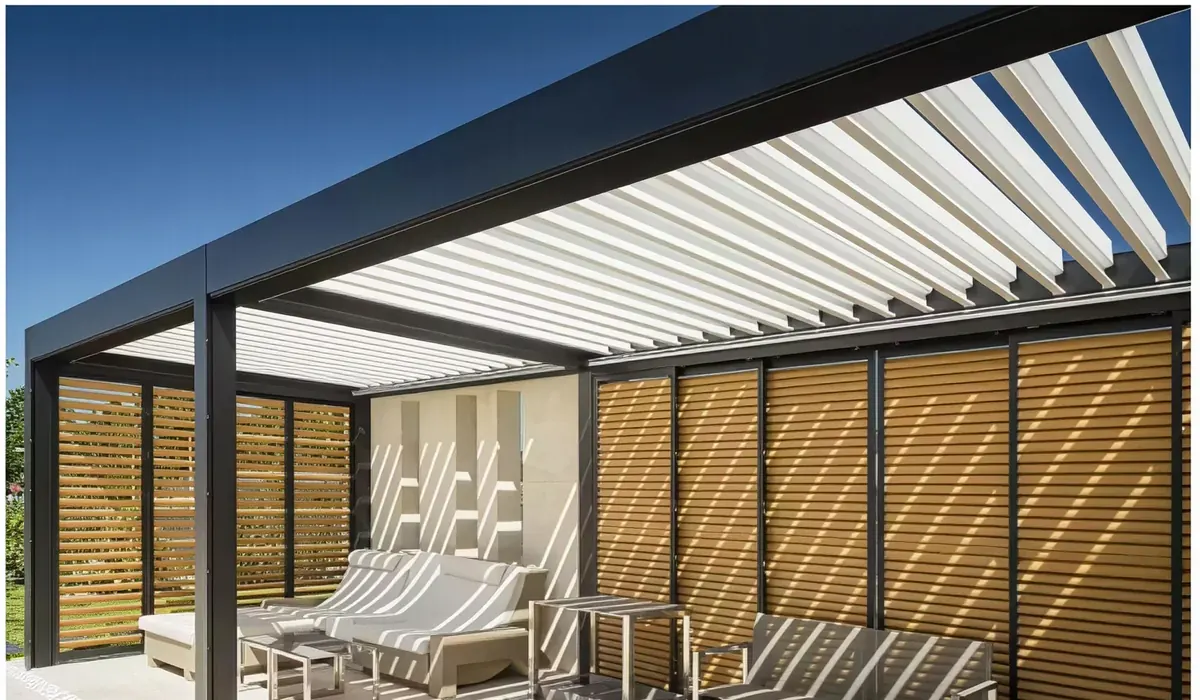
Pergola with timber-effect louvre side screens
Timber-effect side screens: the look of timber with a frame that does not move in the weather.

Which of these is your site?

Send a photo plus the clear span and we return a post layout with the fixing type marked. Nothing is priced before the base is known.